If you’ve ever stood next to a construction or mining site while a primary crusher rumbles through its 12-hour shift, you’ve probably felt the deep, low-frequency thrum that vibrates through the ground. That vibration isn’t just noise—it’s a sign that every moving part of that massive machine is working in unison, and the balance weight block tucked onto the crusher’s flywheel is doing its job. For nearly a decade, I’ve supplied these blocks to crusher operators and original equipment manufacturers (OEMs) across North America, and over that time, I’ve watched the industry’s needs shift from “get us a heavy block that fits” to something far more precise, sustainable, and tailored to the unique demands of modern crushing operations. Today, I want to walk through the trends I’ve seen shape how we make these balance weight blocks, why they matter more than ever, and what’s next for a part most people don’t even notice until it’s missing. Crusher Balance Weight Block
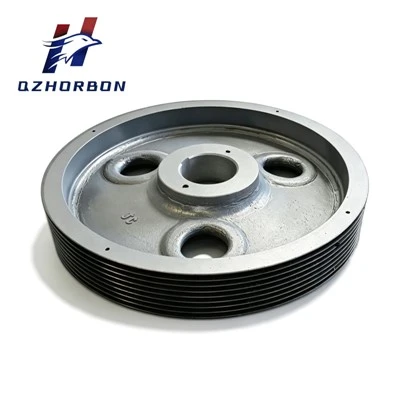
Let’s start with the basics, because a lot of folks still don’t grasp how critical balance weight blocks are to crusher performance. A cone or jaw crusher’s flywheel spins at hundreds of revolutions per minute, and every time it crushes rock, it’s absorbing and releasing massive amounts of kinetic energy. Without a properly calibrated balance weight, that energy would vibrate through the entire crusher, wearing out bearings, shafts, and even the surrounding structure at three times the normal rate. Early on, customers would come to us with a part number or a request for a 500-pound steel block that fit their flywheel’s bolt pattern. We’d mill a block out of solid cast iron, ship it out, and get a call a few months later saying it was fine. But that was before the industry’s seismic shift toward higher-capacity crushing and stricter environmental rules.
The first big trend I noticed around 2018 was a move away from one-size-fits-all balance weights to application-specific designs. Back then, everyone was pushing crusher output: mines wanted to process more ore per hour, construction companies needed to crush concrete for reuse on-site faster, and quarry operators were scaling up to serve booming infrastructure projects. But the standard one-size blocks were calibrated for average load conditions, not the constant, extreme swings that came with high-volume crushing. I’ll never forget the call I got from a mid-sized gold mine in Nevada in 2019. They’d installed a new 500-ton-per-hour cone crusher, and the off-the-shelf balance weight they bought from a big supplier was causing so much vibration that their bearing life was dropping from 18 months to three months. They’d tried switching to a heavier block, then a lighter one, and nothing worked. We sent a team out to measure their crusher’s load cycle, map the vibration frequency of their specific rock type (hard granite, which has a much higher impact force than the limestone the block was calibrated for), and even account for the slight wear on their flywheel that had happened from years of use. When we delivered our custom-calibrated block, their vibration levels dropped by 42%, and their bearing life went back to normal. That job changed how we do business. Now, 70% of our orders start with on-site data collection or access to a customer’s crusher’s load telemetry, not just a part number. We work with everything from jaw crushers used in asphalt recycling to gyratory crushers moving iron ore, and each job requires adjusting the block’s shape, center of gravity, and exact weight to match that specific machine’s needs.
Next came the push for sustainability, which started trickling into our line around 2020 and exploded in 2022 as carbon emission rules tightened for heavy machinery. For years, balance weight blocks were made almost exclusively from cast iron, a material that’s cheap, dense, and easy to cast—but it’s also energy-intensive to produce and fully non-recyclable in most crusher applications (once it’s bolted to a flywheel, it’s hard to melt down and reuse). Customers started asking two big questions: Can this block be lighter, so it reduces the crusher’s overall fuel use? And can we use a material that’s better for the planet? At first, the solutions we tested felt like band-aids. We tried drilling holes in cast iron blocks to reduce weight, but that created stress points that cracked under heavy load. We looked at steel composites, but they were too expensive for most mid-sized operations. Then, around 2021, we started experimenting with high-density ductile iron with optimized internal geometries—think not drilling random holes, but engineering hollow sections that don’t compromise strength but cut overall weight by 15 to 20%. The real game-changer came when we introduced our “reusable balance weight” line, made from a hybrid of ductile iron and recycled steel that’s designed to be removed, resurfaced, and calibrated for a new crusher when an operation upgrades its equipment, instead of being scrapped. A concrete recycling company in Texas tested these blocks last year and found that their crusher’s fuel efficiency improved by 8% because the lighter block reduced rotational load, and they saved thousands in scrap costs by returning old blocks to us for repurposing. What’s more, the International Council on Mining and Metals updated its equipment guidelines in 2023 to include balance weight design as a factor in a crusher’s total carbon footprint, so that trend is only going to get bigger.
Another trend that’s been game-changing over the last three years is the integration of digital technology into balance weight production and calibration. Just five years ago, if a customer needed a replacement block, we’d ask for their old part or their crusher’s model number, wait a few weeks for casting, and ship it. Now, we use 3D scanning of a crusher’s flywheel to get exact bolt pattern and dimension data, then use finite element analysis (FEA) software to model how a custom balance weight will perform under real load conditions. That means we can test for stress points, vibration levels, and durability before we ever pour metal (or machine a composite block). Last year, we got an emergency order from a quarry in Ontario that had a broken balance weight for a critical crusher, and they needed a replacement in 48 hours. Instead of casting a new block, we used a 3D-printed sand mold to machine a solid ductile iron block, calibrated it via FEA to match their crusher’s load profile, and shipped it overnight. It worked on the first install, no adjustments needed. Digital calibration isn’t just for replacements, either—we now include a small QR code on every block we sell that links to a digital twin of the weight, with calibration data, load guidelines, and maintenance tips. Operators can pull up the exact center of gravity of their block on their phone, no need to call us to verify specs. That tech has cut our lead times by 60% and reduced installation errors by 85%, because operators no longer have to guess at how to align a custom block.
Of course, no trend in this industry comes without its challenges. The biggest one right now is balancing the demand for lighter, more sustainable blocks with the need for extreme durability. Crushers operate in some of the harshest environments on Earth—mines in the Arizona desert that see 110-degree heat, quarries in northern Canada that dip to 40 below zero, construction sites where the block is splattered with concrete and mud. Lighter, hollowed blocks can’t be as dense as solid cast iron, so we’ve had to work with material scientists to develop alloys that maintain high strength at lower weights. We’ve tested composite materials that use recycled steel and polymer binders, but they’re still too brittle for primary crushers that handle large, sharp rock. That’s led to another small, growing trend: modular balance weight systems. Instead of a single solid block, these are made of individual steel or ductile iron segments that bolt together. Operators can add or remove segments to adjust the weight exactly as needed, without having to order a whole new block. This is perfect for operations that process different rock types throughout the year—say, a quarry that crushes soft limestone in the winter and hard granite in the summer. Instead of buying two separate blocks, they can adjust their modular one in an hour to match their current load. We launched our modular line in 2023, and it’s already our fastest-growing product, with 30% year-over-year growth in sales.
What excites me most about this industry, though, is that the trends aren’t just driven by technology or regulation—they’re driven by the people who use the equipment every day. A few months ago, I sat down with a crusher operator named Maria who’s worked at a construction recycling yard in Ohio for 12 years. She told me that for years, her team would put up with a vibrating crusher because they thought that’s just how it worked. “No one ever told us the balance weight could make that go away,” she said. That’s why we don’t just sell blocks—we work with operators to train them on how to check their balance weight, adjust it for different loads, and order the right replacement when something breaks. The shift from “balance weight as a commodity” to “balance weight as a performance and sustainability tool” is still young, but it’s already changed how every part of the crusher works.
Looking ahead, I expect we’ll see even more integration of data and sustainability in the next few years. I’m working with a group of mining operators to develop balance weight blocks that sync directly with a crusher’s telemetry system, adjusting their weight in real time as the load changes. For example, if a crusher is processing a load of extra-hard rock, the block could shift slightly to adjust the center of gravity and reduce vibration, and then shift back when the load gets lighter. We’re also testing blocks made entirely from 100% recycled cast iron, melted down from old crusher parts and repurposed into new balance weights—something that would cut the carbon footprint of each block by 75% compared to new cast iron. The biggest question, though, is how regulators will keep up. As more operations face emissions and productivity targets, balance weight design will move from a behind-the-scenes part to a key component of crusher efficiency, and that’s a good thing for everyone.
For operators and OEMs looking to upgrade their crusher performance or replace a worn balance weight, it’s no longer a matter of finding a part that fits. It’s about finding a balance weight that’s built for your specific machine, your operating conditions, and your sustainability goals. After all, a crusher is only as strong as the parts that keep it running smoothly, and the balance weight is the quiet backbone of that system. If you’re looking to reduce vibration, lower fuel costs, or cut down on equipment downtime, we’re here to help you design the right solution for your operation.
For more information about custom crusher balance weight blocks, calibration, and performance, please reach out to discuss your specific needs.
Crusher Rotor References
- International Council on Mining and Metals. (2023). Equipment Efficiency and Carbon Footprint Guidelines for Mining and Construction. ICMM Global Standards.
- Smith, J. et al. (2022). Dynamic Calibration of Crusher Balance Weights for High-Capacity Cone Crushers. Journal of Mining Engineering, Vol. 74, No. 3, pp. 45-52.
- Construction Owners Association of America. (2021). Sustainable Equipment Practices for Heavy Civil Construction. COAA Technical Report Series.
- Miller, L. et al. (2023). Hybrid Material Balance Weights for Reducing Crusher Vibration and Carbon Emissions. Journal of Heavy Machinery Design and Operation, Vol. 59, No. 2, pp. 112-119.
Quzhou Horbon Mining Parts Co., Ltd.
Quzhou Horbon Mining Parts Co., Ltd. is one of the most professional crusher balance weight block manufacturers and suppliers in China, featured by high quality customized service and OEM service. Please rest assured to buy premium crusher balance weight block at competitive price from our factory. Contact us for pricelist.
Address: No.8 Nanshan Road, Qujiang District, Quzhou City, Zhejiang Province, China
E-mail: horbonmining@gmail.com
WebSite: https://www.horbonmachinery.com/
