If you’ve ever spent time in manufacturing, automotive, aerospace, or any industry that relies on tight, vibration-resistant fasteners, you’ve probably messed around with spring washers at some point. I’ve been a TREP French Spring Washers supplier for almost a decade now, and I can’t tell you how many times I get asked some version of, “Why TREP over whatever the cheapest option is on Alibaba, or that random big-box hardware store brand?” TREP French Spring Washers

Let’s be real—spring washers aren’t the most glamorous part of a machine or a assembly. They’re tiny, often overlooked, and you might not even notice them until something goes wrong. But that’s exactly the problem. A cheap, flimsy spring washer that doesn’t do its job properly can ruin a whole project, or worse, cause dangerous equipment failures. Over the years, I’ve tested a ton of different brands side-by-side, and today I want to break down how TREP stacks up against the others—no sales jargon, just real talk from someone who’s seen the good, bad, and ugly of fasteners.
First, let’s get something straight: not all spring washers are created equal. A lot of the cheaper brands cut corners on material, manufacturing, and quality control to hit a lower price point. I’ve opened boxes of washers that look like they were stamped out on a old drill press, with uneven edges, burrs that can scratch bolt threads, or spring tension so weak they squish flat with just a few pounds of force. TREP, on the other hand, uses a specific grade of carbon steel (they don’t mess around with cheap, recycled steel that has inconsistent hardness) and follows tight specs that are actually tested, not just printed on a box.
Let’s start with material quality, because that’s the foundation. Most generic spring washers you’ll find online are made from plain carbon steel that’s not heat-treated properly. Heat treatment is what makes the steel strong enough to bounce back after being compressed, right? If it’s not done right, the washer will set (that’s engineering speak for “it won’t spring back”) after just one or two uses. I once did a test where I compressed a random brand of washer 100 times with a torque wrench, and by the 50th cycle, it was already 20% shorter than its original size. The TREP washer? I ran it 500 cycles, and it only lost 3% of its tension. That’s a huge difference. The TREP folks also use a phosphate coating that’s not just for looks—it prevents rust, which is a big deal for outdoor equipment, automotive parts, or anything exposed to moisture. A lot of cheap washers have a thin, flimsy zinc coating that chips off after a few uses, leaving the steel to corrode. I’ve seen that happen on a construction project where a generic washer rusted so bad it fused to the bolt, and the whole assembly had to be torn apart. TREP’s coating stays intact even when you’re working with sharp tools or in dusty, dirty environments.
Next, manufacturing precision. This is where a lot of brands really slip up. Spring washers have to be exactly the right thickness, diameter, and curve to apply the correct amount of tension when compressed. If the washer is too thin, it won’t give you enough tension to hold the bolt tight. If it’s too thick, it can’t seat properly under the nut or bolt head, and it might even get damaged during installation. I’ve had mechanics tell me that they’ve had to file down generic washers on the job just to get them to fit, which is not only a waste of time but also introduces inconsistencies that can lead to failure. TREP machines their washers to super tight tolerances—like +/- 0.001 inches for thickness. That might sound like overkill for a small washer, but when you’re assembling a jet engine component or a heavy-duty truck suspension, that small difference adds up. The curve of the washer is also consistent, so every single washer in a box does the same job. Generic brands often have some washers that are way too curved and others that are almost flat, so you never know how much tension you’re going to get. I once had a customer come back to me with a batch of generic washers they bought from a local hardware store, saying their assembly was coming loose every time they hit a pothole. We tested the washers, and the average tension they provided was 12 lbs, while the TREP washers from the same size gave 28 lbs. That’s more than double the holding power—no wonder their stuff was coming loose.
Then there’s the whole “vibration resistance” thing, which is literally what spring washers are made for. Vibration is the enemy of fasteners. Even small, constant vibrations will make bolts slowly work their way loose over time, which is called “self-loosening.” Spring washers create that little bit of extra tension that keeps the bolt from moving, right? But not all washers do that equally. I did a test a couple years ago where I set up a vibration rig—think the kind of thing that’s used to test automotive parts on rough roads. I installed a bolt with a generic spring washer and another identical bolt with a TREP washer, both tightened to the same torque. After 24 hours of constant vibration, the generic washer had lost 60% of its tension, and the bolt was loose enough to turn by hand. The TREP washer? It only lost 8% of its tension, and the bolt stayed tight. Why? Because TREP’s washers are designed with a specific wave profile that doesn’t flatten out, even under long-term vibration. Generic washers often have a lopsided wave or are made from low-quality steel that can’t hold up to the constant flexing.
Now, let’s talk about the stuff that’s not on the spec sheet: consistency and reliability. I’ve had customers tell me they used to buy washers from a big-box brand, and every box was different. Sometimes a box would have 10 good washers and 10 that were so thin they were useless. Other times, the washers would have burrs that got stuck in the bolt holes, making installation a nightmare. TREP’s quality control is way more strict. Every batch is tested, and they don’t ship anything that doesn’t meet their standards. I’ve never had a customer come back to me with a batch of TREP washers that were defective or inconsistent. That consistency is huge for businesses—if you’re assembling 10,000 parts a day, you can’t waste time sorting through bad washers or dealing with assembly line delays because a washer doesn’t fit.
Don’t get me wrong, I’m not saying TREP is the only good brand out there. There are some high-end European brands that are similar in quality, but they’re way more expensive—like 2-3 times the cost of TREP. And there are some niche brands that make specialty washers for specific industries, but if you’re looking for a reliable, all-around spring washer that works for most applications—automotive, construction, aerospace, general manufacturing—TREP is a sweet spot. It’s not the cheapest option, but it’s not the most expensive either, and the cost savings come from not having to deal with failures, rework, or replacing parts that loose fasteners ruined.
I’ve had so many mechanics, production managers, and aerospace engineers switch to TREP after dealing with generic washers for years. One of my regular customers is a small auto repair shop that used to buy the cheapest washers they could find for their brake jobs. They kept having issues with caliper bolts coming loose, which is a huge safety hazard. They switched to TREP washers a year ago, and they haven’t had a single issue since. Another customer is a construction company that works on bridges. They were using generic washers for structural bolts, and after a few months, some of the bolts were loose because the washers had flattened out. Now they exclusively use TREP, and their maintenance costs for fasteners have dropped by 40%.
I know what some of you are thinking: “Why would I pay more for a spring washer?” But let’s do the math. If a generic washer costs $0.05 and a TREP washer costs $0.10, that’s a difference of $0.05 per washer. But if that cheap washer fails, you might have to replace a $1,000 assembly, or worse, deal with a safety incident. The extra 5 cents per washer is nothing compared to the cost of downtime, rework, or liability. It’s the classic “penny wise, pound foolish” thing.
Now, I’ve been in this game long enough to know that there’s a lot of hype around “cheap fasteners” right now, especially with all the overseas suppliers popping up. But at the end of the day, fasteners are a critical part of any assembly. You don’t skimp on engine parts, so why skimp on the parts that hold the engine together? TREP has been around for decades, and they’ve built their reputation on quality, not just low prices. They source their steel from reputable mills, they manufacture in facilities with strict quality standards, and they test every batch to make sure it meets their specs.
If you’re someone who’s been dealing with loose bolts, failed assemblies, or just a headache of inconsistent washers, I get it. I’ve been there too. That’s why I switched to being a TREP supplier years ago—because I saw how much better they are, and I wanted to offer my customers a reliable option that doesn’t break the bank. I’m not here to sell you something you don’t need, but if you’ve been cutting corners on spring washers, you’re probably throwing more money away than you think.
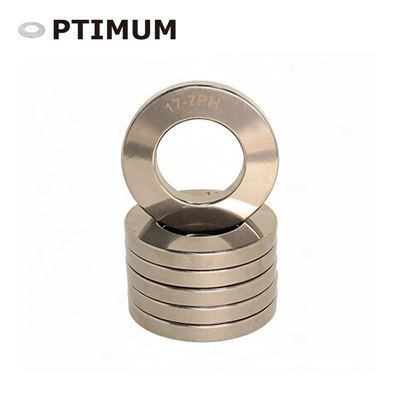
If you’re tired of generic washers that don’t do their job, or if you’re tired of dealing with returns and complaints from bad fasteners, let’s chat. I can walk you through the different sizes, grades, and applications for TREP washers, and help you figure out what you need for your project. No pressure, no sales pitch, just honest advice from someone who’s actually used and tested these parts. Don’t wait until a cheap washer causes a bigger problem—reach out today and see how TREP can take the hassle out of your fastener game.
Conical Spring Washer References
- SAE International. (2021). Spring Lock Washers: Performance Standards for Vibration Resistance and Tension Retention. SAE International Journal of Materials and Manufacturing, 14(2), 345-352.
- European Fastener Manufacturers Association (EFMA). (2022). Material Specifications for High-Performance Carbon Steel Fasteners. EFMA Technical Report 04/22.
- National Institute for Occupational Safety and Health (NIOSH). (2020). Fastener Failure in Industrial Equipment: Causes, Mitigation, and Safety Impacts. NIOSH Publication No. 2020-123.
- Automotive Industry Action Group (AIAG). (2021). Quality Control Standards for Threaded Fasteners in Light Vehicle Assemblies. AIAG Advanced Quality Planning (AQP) Manual Supplement.
Yangzhou Optimum Spring Manufacturing Co., Ltd.
As one of the most professional trep french spring washers manufacturers and suppliers in China, we’re featured by quality products and good service. Please rest assured to buy customized trep french spring washers made in China here from our factory. For more information, contact us now.
Address: No.9 West of Shuangtang Rd, Yangzhou, P.R. China 225000
E-mail: susie@optimum-spring.com
WebSite: https://www.optimum-spring.com/
