As a supplier of welded parts, I understand the crucial role that evaluating the quality of these components plays in ensuring the success of various industries. Welded parts are used in a wide range of applications, from automotive and aerospace to construction and manufacturing. Therefore, it is essential to have a comprehensive understanding of how to assess their quality accurately. In this blog post, I will share some key factors and methods for evaluating the quality of welded parts. Welded Parts

Visual Inspection
Visual inspection is the most basic and commonly used method for evaluating the quality of welded parts. It involves examining the weld joint with the naked eye or using magnifying tools to detect any visible defects. Some of the common visual defects include cracks, porosity, lack of fusion, and excessive spatter.
Cracks are one of the most serious defects in welded parts as they can significantly reduce the strength and integrity of the joint. They can occur due to various factors, such as improper welding parameters, high residual stresses, or the presence of impurities in the base metal. Porosity refers to the presence of small holes or voids in the weld metal, which can be caused by factors such as improper shielding gas, contaminated filler metal, or excessive moisture. Lack of fusion occurs when the weld metal does not fully fuse with the base metal, resulting in a weak joint. Excessive spatter is the unwanted deposition of molten metal outside the weld joint, which can affect the appearance and quality of the part.
During visual inspection, it is important to pay attention to the overall appearance of the weld, including the bead shape, size, and uniformity. The weld bead should be smooth, continuous, and free of any irregularities. The width and height of the bead should be consistent throughout the joint, and the toe of the weld should be well-blended with the base metal.
Non-Destructive Testing (NDT)
Non-destructive testing (NDT) methods are used to detect internal defects in welded parts without causing any damage to the component. These methods are particularly useful for detecting defects that are not visible to the naked eye, such as internal cracks, porosity, and lack of fusion. Some of the commonly used NDT methods for evaluating the quality of welded parts include ultrasonic testing (UT), radiographic testing (RT), magnetic particle testing (MT), and liquid penetrant testing (PT).
Ultrasonic testing (UT) uses high-frequency sound waves to detect internal defects in the weld. The sound waves are transmitted through the weld metal, and any defects in the path of the waves will cause a reflection or attenuation of the signal. By analyzing the reflected or attenuated signals, the presence and location of the defects can be determined.
Radiographic testing (RT) involves using X-rays or gamma rays to produce an image of the internal structure of the weld. The X-rays or gamma rays pass through the weld metal, and any defects in the path of the rays will appear as dark areas on the radiographic film. RT is particularly useful for detecting internal cracks, porosity, and lack of fusion.
Magnetic particle testing (MT) is used to detect surface and near-surface defects in ferromagnetic materials. A magnetic field is applied to the weld, and magnetic particles are then applied to the surface. Any defects in the surface or near-surface of the weld will cause a disruption in the magnetic field, which will attract the magnetic particles, making the defects visible.
Liquid penetrant testing (PT) is used to detect surface defects in non-porous materials. A liquid penetrant is applied to the surface of the weld, and it is allowed to penetrate into any surface defects. The excess penetrant is then removed, and a developer is applied to the surface. The developer will draw the penetrant out of the defects, making them visible.
Mechanical Testing
Mechanical testing is used to evaluate the mechanical properties of welded parts, such as strength, ductility, and toughness. These tests are typically performed on specimens that are cut from the welded parts. Some of the commonly used mechanical tests for evaluating the quality of welded parts include tensile testing, bend testing, and impact testing.
Tensile testing involves applying a tensile force to a specimen until it breaks. The maximum load that the specimen can withstand before breaking is called the ultimate tensile strength (UTS). The elongation of the specimen at the point of failure is also measured, which provides information about the ductility of the weld.
Bend testing involves bending a specimen to a specified angle and then examining it for any cracks or defects. Bend testing is used to evaluate the ductility and soundness of the weld.
Impact testing involves striking a specimen with a pendulum hammer to measure its resistance to impact. The energy absorbed by the specimen during the impact is measured, which provides information about the toughness of the weld.
Weld Quality Standards
In addition to the above methods, it is also important to follow weld quality standards and specifications when evaluating the quality of welded parts. These standards provide guidelines for the design, fabrication, and inspection of welded joints. Some of the commonly used weld quality standards include the American Welding Society (AWS) standards, the International Organization for Standardization (ISO) standards, and the European Union (EU) standards.
By following these standards, you can ensure that your welded parts meet the required quality and performance criteria. It is also important to have a quality control system in place to monitor and control the quality of your welded parts throughout the manufacturing process.
Conclusion
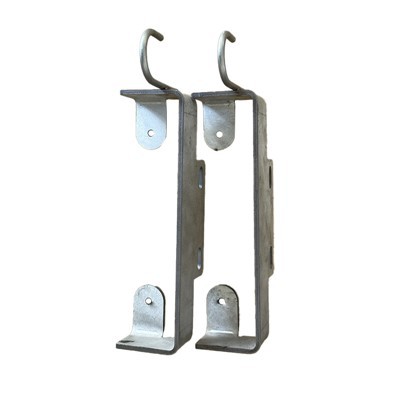
Evaluating the quality of welded parts is a critical process that requires a combination of visual inspection, non-destructive testing, mechanical testing, and compliance with weld quality standards. By using these methods and following the appropriate standards, you can ensure that your welded parts meet the required quality and performance criteria.
Welded Parts As a supplier of welded parts, I am committed to providing high-quality products that meet the needs of my customers. If you are looking for a reliable supplier of welded parts, please feel free to contact me to discuss your requirements. I would be happy to provide you with more information about our products and services.
References
- American Welding Society (AWS). AWS D1.1/D1.1M:2020, Structural Welding Code – Steel.
- International Organization for Standardization (ISO). ISO 5817:2014, Welding – Fusion – welded joints in steel, nickel, titanium and their alloys (beam welding excluded) – Quality levels for imperfections.
- European Union (EU). EN ISO 15614 – 1:2017, Specification and qualification of welding procedures for metallic materials – Welding procedure test – Part 1: Arc welding.
Hebei Kailu Hardware Manufacturing Co., Ltd.
We’re well-known as one of the leading welded parts manufacturers and suppliers in China, also support customized service. Welcome to buy high quality welded parts made in China here and get free sample from our factory. For price consultation, contact us.
Address: Yaojiubo Village, Nanpi Town, Nanpi County, Cangzhou City, Hebei Province
E-mail: 714184486@qq.com
WebSite: https://www.weldedpart.com/
