Hey there, if you’re scrolling for answers on how to actually test if those FRP standard profiles you’re relying on hold up under repeated stress (not just the first time you load ‘em), you’ve landed in the right spot. I’ve been selling FRP standard profiles for over 8 years now—seen everything from clients who thought “it looks tough” was enough, to ones who came back 6 months later asking for replacements because their bins or walkways cracked out. The truth is, fatigue testing for FRP isn’t as scary as it sounds, and if you do it right, you won’t be stuck with a bunch of broken, useless profiles that waste your time and money. FRP Standard Profile
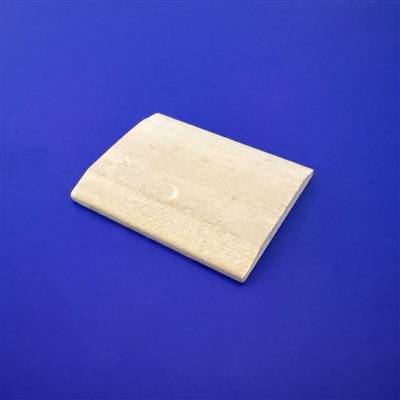
First, let’s get one thing straight: FRP is fiberglass-reinforced polymer, right? It’s awesome—lightweight, corrosion-proof, way cheaper than steel for tons of jobs—but it’s not indestructible. Fatigue happens when you keep bending, twisting, or loading it over and over again, even if none of those loads are enough to break it in one go. Like, think about a sidewalk slab: it doesn’t break when you step on it once, but after 10,000 trips back and forth, it cracks. FRP works the same way. If you’re using our profiles for things like mezzanine supports, trailer side rails, or even farm equipment that gets bumped all day, you need to test their fatigue resistance, not just their max load strength.
I get it—you don’t have a super fancy lab in your back shed, and neither do most small to mid-sized businesses that buy FRP standard profiles. So I’m gonna break this down into two parts: first, the quick, at-work tests that’ll give you a real idea if a profile is gonna hold up, and second, the more formal, lab-style checks if you need that certification for a project or to check a new batch. I’ve done both over the years—used the quick stuff for my own quality control, and sent batches to a trusted lab when a big client needed proof.
Let’s start with the basic, do-it-yourself tests because that’s what most folks actually need. First, you’ve got to define what “use case” your profile is actually dealing with. That’s step one—don’t skip this. I can’t tell you how many times a client tested a 6-foot profile the same way they tested a 10-foot one, and the results were totally off. If your profile’s gonna be part of a walkway that gets 500 steps a day, that’s way different than a support beam for a storage rack that’s loaded 24/7. Jot down: how many load cycles (times you’ll put weight on it) per day? What’s the max random weight it’ll see, not just the set weight? Is it outdoors, where temperature swings or moisture might make it weaker? That context is way more important than pulling numbers out of thin air.
Once you’ve got that, the simplest fatigue test is the “repeated load hold.” Grab a sample of the FRP standard profile—make it the exact size and shape you’re actually gonna use (don’t use a random offcut that’s shorter or has a different cross-section; that’s a waste). If you’re testing a beam that’ll span 4 feet between two supports, set it up exactly that way in your warehouse. Then, get a weight that’s 20-30% of the max load it’s rated for. Wait—20-30%? Yeah, because fatigue is about repeated low loads breaking it, not one big weight. If its rated max is 500 lbs, use 100-150 lbs. Now, hang that weight on the center of the beam, and let it sit for a minute, then take it off. Do that over and over. How many times? Let’s say if your use case is 500 steps a day, that’s 500 cycles. If it’s a trailer rail that gets loaded/unloaded 10 times a day, that’s 10 cycles. I usually do double that number just to be safe—so if you need 500, do 1,000. After that, check it: any cracks at the points where the weight was applied, or where the profile rests on the supports? Any bending that doesn’t spring back? That’s a red flag.
Wait, there’s a catch here. FRP is super sensitive to how it’s made. Some profiles have a solid outer layer, others are hollow, some have a rougher surface texture. If you’re testing a hollow rectangular profile, make sure you’re not putting the weight right on the edge of the hollow part—you’ll get a false crack. And never test a sample that’s already got a scratch or a ding from shipping; that scratch will become a failure point, not a real indicator of the whole batch. I learned that the hard way once: sent a batch of profiles to a client, and they tested a sample with a shipping scratch, said it failed. Turned out the scratch was from their forklift, not the profile itself. Lesson there: always use a perfect sample.
If you want something a little more advanced but still doable in a shop, there’s the cyclic bending test. This one mimics the real back-and-forth flex that FRP gets a lot of the time, especially on walkways, handrails, or support beams that bounce when you move something heavy. To do this, you’ll need a way to repeatedly bend the profile—we’ve actually rigged up a simple version using a winch and a stopwatch for our quality checks. Set the profile up as a simple beam, supports at the ends. Then, attach a small weight to a chain on the center, and use the winch to pull the center down 10-15% of its total deflection (how much it bends) at max load. Hold that bent position for 10 seconds, then let it go back to straight, wait 10 seconds, and repeat. Again, do this for the number of cycles you calculated for your use case. After, check for micro-cracks—those tiny hairline cracks you can barely see with your eye, but which will grow over time. If you see any, that profile’s fatigue resistance is too low for your job.
Now, if you need official data—like for a construction project, or to prove to OSHA, or if you’re switching to a new supplier and want to make sure their stuff is legit—you’ll need to do lab testing. This is not something you can do in your warehouse, but it’s worth knowing what happens in there, so you can hold your suppliers accountable. Most labs use two main standards for FRP fatigue, and guess what? I make sure all our FRP standard profiles meet these, because I don’t want my clients dealing with headaches.
First, there’s the cyclic load test per ASTM D2991. That’s the big one for FRP for structural uses. Here’s what that entails: the lab takes a representative sample of your profile, cuts it to the exact dimensions you specify (usually 4 feet long for beams), and mounts it in a test frame. The frame applies a repeated, controlled load—usually between 10% and 50% of the profile’s ultimate tensile strength (that’s the max load it can take before breaking). It cycles this load thousands, even hundreds of thousands of times, depending on what standard you need. For example, if it’s a profile for a permanent walkway, they might do 1,000,000 cycles to mimic 10 years of use. The lab monitors the profile the whole time: if at any point the deflection (bend) increases more than 20% from the original, that’s a fatigue failure. If it breaks, obviously that’s a failure too.
The other common lab test is for flexural fatigue, per ISO 14125. That’s similar, but it focuses on bending rather than tension, which is super relevant for profiles that are used as beams or rails. The lab will bend the profile back and forth at a controlled rate, measuring how much stress it can take before it fails. One thing I love about our profiles is that they pass this test with room to spare—we use a balanced fiberglass mat and roving mix, not the cheap cut fibers that some suppliers use to save a buck. Those cheap fibers snap under repeated stress, which is why you’ll see profiles from big box stores cracking after a year. Our mix is built to flex, not break.
Wait, let’s talk about what affects fatigue resistance, because that’s why testing is so important. FRP fatigue doesn’t just depend on the material—it depends on how the profile is extruded, right? Extrusion speed, temperature, the resin type, the fiber orientation. If the fibers are all going the same direction (along the length of the profile), that’s strong for tension, but weak for bending. If they’re woven or chopped evenly, that’s way better for fatigue. That’s why when we test our own profiles, we test both along the length and across the cross-section—because our clients use them both ways. Also, resin type: polyester resin is cheaper, but it’s more brittle, so it cracks easier under repeated load. Vinyl ester or epoxy resin is more flexible, better for fatigue. We use vinyl ester for most of our standard profiles, because it balances cost and performance perfectly for most jobs. I’ve had a client switch from a competitor’s polyester profile to ours, and their fatigue life went from 6 months to 5 years—they still message me about that.
Another thing to watch out for: environmental fatigue. If your profile is gonna be outside, in the sun or rain, that changes things. UV rays break down the resin over time, making it more brittle, so fatigue resistance drops. Water can get into the tiny gaps between fibers, making the profile weaker too. So when you test, if your use case is outdoor, add a quick pre-test: leave a sample outside for 2 weeks (or bake it in an oven at 120°F for a day to mimic UV heat) before doing the load tests. I always recommend this, because I’ve seen clients test a profile indoors, then put it outside, and it cracks in 3 months. That’s not the profile’s fault—they didn’t account for environmental stress in their testing.
Now, let’s talk about common mistakes people make when testing, because I’ve seen all of these. First, testing too small a sample. If you test a 1-foot sample of a 10-foot profile, that’s not representative. Longer profiles flex differently, and their weak points are different. Second, using the wrong load. Like I said earlier, using the max load instead of a percentage of that for fatigue testing is useless—fatigue is about repeated stress, not one big load. Third, not checking for micro-cracks. Those are the silent killers. I had a client test a profile for 10,000 cycles, no visible cracks, so they installed it. 6 months later, it cracked—turns out there were micro-cracks that grew as they used it. Fourth, testing a sample that’s not the same as the actual product. Don’t test a smooth sample if your profile has a non-slip grit surface—add that grit to your test sample, because that can cause stress points.
At the end of the day, testing FRP standard profile fatigue resistance isn’t just about checking a box—it’s about making sure your investment lasts. Whether you’re a contractor building a mezzanine, a farmer making feed trough supports, or a warehouse manager building walkways, you don’t want to replace your profiles every year. We’ve been in this game long enough that we don’t sell profiles that fail fatigue testing—we test every batch ourselves, with the same methods I told you about, before they even leave our warehouse. We’ll even send you a free sample if you want to do your own quick test, or we can connect you with a trusted lab for official testing if you need that certification.
If you’re curious about our FRP standard profiles, want to ask more about fatigue testing for your specific project, or need a quote, just reach out. No sales jargon, no hidden fees, just straight answers from someone who’s been in your shoes, dealing with the same fatigue issues you are.
Fiberglass Handrail and Fencing References
ASTM Standard D2991, Standard Test Method for Flexural Fatigue Properties of Fiber-Reinforced Plastics
ISO Standard 14125, Fibre-reinforced plastic composites – Determination of flexural properties
Tecchio, G., et al. (2019). Fatigue behavior of pultruded FRP profiles under cyclic bending loads. Composites Part B: Engineering.
Yizheng Wanteng Composites Co., Ltd.
As one of the most professional FRP standard profile manufacturers and suppliers in China, we’re featured by quality products and good service. Please rest assured to wholesale bulk slip-resistant FRP standard profile for sale here from our factory. Contact us for pricelist.
Address: No. 20 Longyi Road, Qingshan Town Industrial Park, Yizheng City, Jiangsu Province, China
E-mail: mark@wantfrp.com
WebSite: https://www.wantfrp.com/
