If you’ve ever turned the key in a car, truck, or even a small construction engine and felt that low, consistent cranking before the first sputter of ignition, you’ve experienced the quiet work of a component most people never stop to name: the engine starter motor. As a long-time engine parts supplier, I’ve spent more than 20 years troubleshooting, testing, and perfecting these parts, and I can tell you this: the starter motor isn’t just a “switch to turn the engine over.” It’s the unsung link between electrical power and mechanical motion, without which even the most well-built engine is just a hunk of metal and fuel. Engine

Let’s start with something basic, because I’ve learned over the years that the most foundational parts are often the most misunderstood. Most modern engines—whether gasoline, diesel, or even the small gas-powered engines used in lawn equipment and generators—are compression-ignited or spark-ignited, but neither type can start itself. To ignite the air-fuel mixture in the cylinders, the crankshaft has to spin at a specific, consistent speed, called cranking speed. For passenger car gas engines, that’s usually 50 to 150 revolutions per minute (RPM); for heavy-duty diesel engines, it’s higher, sometimes 100 to 250 RPM, because diesel requires more compression to ignite. Before the starter motor existed, people relied on hand cranks or kick starters to get that spin. If you’ve ever watched old footage of someone winding a crank on a 1920s truck, you know how violent and unreliable that was—one wrong move and you could get a broken wrist. The starter motor revolutionized transportation by taking that manual effort and replacing it with controlled electrical power, and that core function hasn’t changed in 100 years, even as the tech under the hood has evolved.
But here’s where most explanations skip the detail that matters to anyone who actually relies on engine parts: the starter motor doesn’t work alone. It’s part of a tightly integrated system, and that’s why choosing a high-quality starter (like the ones we supply) makes all the difference in avoiding downtime. Let’s break down that sequence step by step, because it’s a process that happens in less than two seconds when you turn the ignition. First, you activate the ignition switch, which sends a low-voltage signal to the starter solenoid. The solenoid is essentially a remote switch that moves two things: a heavy metal gear called the pinion, and a set of internal contacts that complete the high-current circuit between the vehicle’s battery and the starter motor itself. The pinion gear meshes with a large, ring-shaped gear (called the flywheel ring gear) that’s bolted to the back of the engine’s crankshaft. That mesh is critical—if it doesn’t line up perfectly, you get that awful grinding noise you’ve probably heard someone make when their car won’t start, and that’s a fast way to wear out both the pinion and the flywheel.
Once the solenoid clicks into place, the battery sends hundreds of amps—sometimes more than 1,000 amps for heavy-duty diesels—through the starter motor’s windings. Those windings are usually copper wires wrapped around an iron core, and when current flows through them, they create a magnetic field. That magnetic field interacts with another permanent magnet or winding inside the starter, turning the starter’s armature (the rotating part) at high speed. The pinion is spinning fast, but because it’s engaged with the flywheel, that motion transfers directly to the crankshaft, turning it at the required cranking speed. As soon as the engine fires up and starts running on its own, the flywheel’s speed jumps way higher than the starter’s can spin—usually 500 RPM or more, which is too fast for the small starter. That’s why every starter has a one-way clutch, called an overrunning clutch or Bendix drive, on the armature shaft. The second the engine’s speed overtakes the starter’s, the clutch disengages the pinion from the flywheel, so the starter doesn’t get spun at destructive speeds. That tiny clutch is one of the most failure-prone parts of the starter, and it’s why we engineer every starter we supply with high-grade heat-treated steel for the clutch components, not cheap stamped metal.
Now, let’s talk about why this function matters beyond just getting in the car and going. For our customers—construction fleets, agricultural operators, delivery companies, and even recreational vehicle owners—engine downtime isn’t an inconvenience. It’s lost revenue, missed deadlines, and sometimes even safety risks. Last year, we worked with a regional landscaping company that had three 2018 trucks with aftermarket starter motors that failed during a busy mowing season. Each replacement took four hours of mechanic time, and each day of downtime cost them an average of $1,200 in lost jobs. That’s the hidden cost of cutting corners on starter parts: it’s not just the price of the part, it’s the cost of what happens when it fails. The starter motor has to operate under brutal conditions, too. It’s placed low in the engine bay, so it’s exposed to road salt, mud, water, and extreme temperature swings—from 120-degree summer days on a construction site to 20-degree winter mornings in the Upper Midwest. A good starter has to withstand all that while delivering consistent cranking power, and that’s exactly what we engineer into every unit we supply.
I often get asked if electric starter motors are going away, especially with the rise of hybrid and electric vehicles. The short answer is no—internal combustion engines (ICEs) aren’t disappearing anytime soon, and even many hybrids have a 12V starter motor for cold starts and low-load operation. The function of the starter motor has actually adapted a little, too. On modern gas direct-injection engines, the starter has to spin the engine faster to build up fuel pressure before ignition; on start-stop systems, which turn the engine off at red lights to save fuel, the starter has to restart the engine hundreds of times over its lifespan, instead of just once per drive cycle. That’s why we’ve updated our starter designs to handle those repeated cycles: we use higher-grade copper windings that resist heat breakdown, sealed bearings that keep out dirt and moisture, and stronger solenoids that can handle the frequent engagement.
Another common question is how to tell if a starter motor isn’t working correctly, which ties back to understanding its function. The most obvious sign is when you turn the key and hear just a click, or a whirring noise without the engine cranking. A click usually points to a failed solenoid, while a whir without cranking means the pinion isn’t engaging with the flywheel, or the overrunning clutch is bad. In rare cases, you might smell burning wiring from the starter, which means it’s drawing too much current and overheating—usually from worn bearings or shorted windings. Catching these signs early is key to avoiding full engine failure, and our technical support team works with customers every day to diagnose starter issues, whether they’re dealing with a light truck or a 18-wheeler diesel engine.
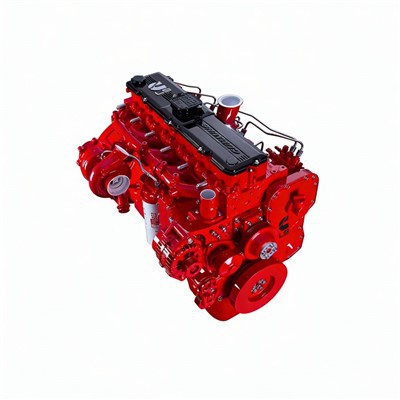
At our core, we’re not just an engine supplier—we’re a partner that understands that every part in an engine has a job that keeps operations running. The starter motor might seem small, but without it, none of the engine’s other components can do their work. It’s the first point of contact between a driver or operator and their engine, and its reliability sets the tone for the entire drive or work day. We’ve spent years testing our starters in real-world conditions, not just lab settings, because we know our customers can’t afford to have their starters fail when they need them most.
Bulldozer If you’re a fleet manager, mechanic, or engine operator looking for a reliable starter motor that’s engineered to last, we’re here to help. We can match you with the right starter for your specific engine make and model, offer bulk pricing for fleets, and provide technical support to ensure proper installation and maintenance. Reach out to our team to discuss your engine needs and find the right starter solution for your operation.
References
- Internal Combustion Engine Fundamentals, John B. Heywood, McGraw-Hill Education, 2018
- Automotive Electrical Systems and Technology, James D. Halderman, Pearson, 2021
- Heavy Duty Diesel Engine Component Design, Robert L. Tobolski, SAE International, 2019
- Society of Automotive Engineers (SAE) Standard J1171, Starter Motor Performance Requirements, 2022
China Machinery International Trading Co., Ltd.
China Machinery International Trading Co., Ltd. is one of the most experienced engine manufacturers and suppliers in China. We warmly welcome you to buy cheap engine made in China here from our factory. Quality products and reasonable price are available.
Address: Room 233, 2nd Floor, Building 16A, No. 1, Shuguang Xili Jia, Chaoyang District, Beijing
E-mail: Info@tajhzg.com
WebSite: https://www.cnmachinery-global.com/
