If you’ve ever worked with stretch fabrics—think activewear waistbands, compression sleeves, or even the elastic in a well-loved pair of socks—you’ve likely encountered rubber covered yarn (RCY). As a supplier who’s spent 12 years sourcing and delivering this material to textile mills and apparel brands across North America and Europe, I can tell you that even the highest-quality RCY won’t perform as intended if it’s mishandled during storage. I’ve seen brands lose hundreds of dollars in production runs because their warehouse staff stuck a pallet of RCY in a damp corner, or retailers left unopened bales in a sun-drenched storeroom for months. The good news? Storing RCY properly isn’t rocket science—it just requires attention to a few key details rooted in how rubber and the surrounding synthetic coverages (usually nylon or polyester) behave over time. Rubber Covered Yarn
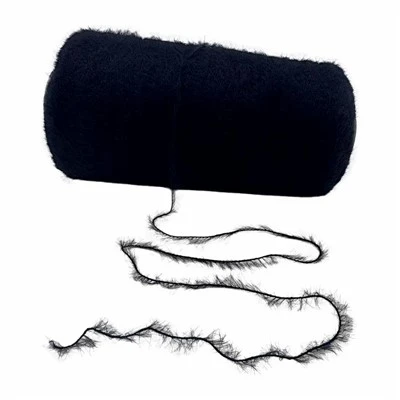
Let’s start with the basics: what makes RCY unique, because that’s directly tied to how you store it. RCY is made by twisting a core of natural or synthetic rubber filament with a outer “cover” of nylon, polyester, or cotton. The rubber core is what gives it stretch (often 200–500% elongation, depending on the grade), and the cover protects that delicate rubber from abrasion, UV damage, and oil. The problem is, rubber is incredibly sensitive to environmental stressors. Exposure to heat, moisture, UV light, and even certain chemicals can break down the rubber’s molecular structure, leading to reduced stretch, stickiness, or even brittleness long before you ever unwind the yarn for production. That’s why every storage step starts with minimizing exposure to those stressors.
First, let’s talk about the two most common ways RCY is shipped to customers: in individual cones (for smaller production runs or specialty orders) or in large, tightly wrapped bales (for bulk orders of thousands of yards). Your storage strategy will shift slightly depending on which form you have, but the core rules apply to both.
Let’s begin with the ideal storage environment, the foundation of proper RCY storage. Over my years in this business, I’ve worked with textile engineers to nail down the optimal conditions, and it’s not complicated. First, temperature: RCY hates extreme heat or cold. The sweet spot is 15–25°C (59–77°F). Why? At temperatures above 30°C, the rubber core softens, which can cause it to shift inside the cover—leading to uneven stretch when you use the yarn, or even the core breaking through the outer cover over time. I once had a customer in Texas who stored a 500-bale order in an uninsulated warehouse during a summer heatwave; when they unloaded the bales three months later, half had yellowed and developed a sticky texture. Testing showed the internal temperature of the bales had hit 42°F at points, enough to break down the natural rubber core. On the flip side, temperatures below 10°C make the rubber brittle, so if you’re storing RCY in a cold warehouse, you want to let it acclimate to room temperature for 24–48 hours before using it to avoid snapping during unwinding or processing.
Next, humidity. RCY needs a relative humidity (RH) of 40–60% RH. Too much humidity, and two things happen: first, the outer cover (especially nylon) absorbs moisture, which can cause the yarn to shrink slightly and develop a musty odor. More critically, moisture can seep through any tiny gaps in the outer cover and begin to degrade the rubber core. I’ve seen mold grow on RCY cones stored in a damp basement—even small mold spots can weaken the rubber so much that the yarn breaks during knitting, leading to thousands of dollars in waste. Too little humidity (below 30% RH), and the outer cover can become static-prone, causing cones to stick together and yarn to tangle when you’re unwinding it. For customers in dry climates, a small humidifier in the storage area is a cheap fix; for those in humid regions, dehumidifiers or even silica gel packs placed inside bales (as I started doing a few years ago after that Texas incident) make a big difference.
Now, location within your storage space. This is a detail many people overlook, but it’s one I drill into every customer who works with me. Never store RCY near areas with direct sunlight—like windows, loading docks, or skylights. UV radiation is one of rubber’s biggest enemies; it breaks down the molecular bonds, leading to a process called “ozone cracking,” where tiny cracks form in the rubber core that aren’t visible to the naked eye until it’s too late. I once had a small boutique apparel brand order 20 cones of black RCY for a custom activewear line and store them on a shelf near their front window for six weeks. When they used the yarn, half the cones had turned gray and brittle, and the stretch was less than half of what it should have been. Even indirect sunlight through a window can cause damage over time, so store RCY in a climate-controlled, windowless area if possible.
Also, stay away from areas with strong chemicals or fumes. If you store RCY near cleaning supplies, gasoline, solvents, or even paint, those fumes can permeate the outer cover and react with the rubber core. Ozone from electrical equipment (like power transformers or large motors) is another hidden hazard—it accelerates rubber degradation even at low concentrations. I always advise customers to keep RCY at least 10 feet away from any industrial machinery or chemical storage areas.
Now, how to handle the actual stacking of cones and bales, because improper stacking is a surprisingly common cause of RCY damage. Let’s start with bales: when RCY is shipped in bales, it’s wrapped in plastic to protect it during transit, but that plastic isn’t designed for long-term storage. If you leave bales wrapped in their shipping plastic for more than a month, moisture can get trapped inside, leading to mold or mildew growth. So the first step when you receive a bulk order is to unwrap the bales and re-wrap them in breathable, UV-resistant plastic film—this keeps dust and moisture out while allowing any trapped air to circulate. When stacking bales, never stack more than six high. Too much weight on the bottom bale can crush the yarn inside, flattening the bale so the yarn twists unevenly and has reduced stretch when used. I’ve seen a customer stack 10 bales high and the bottom two were so compressed that when they cut them open, the yarn was mashed together into a solid block.
For individual cones: cones should always be stored upright, never on their sides. If you lay a cone on its side, the weight of the yarn on the outer edge can cause the core to stretch unevenly, leading to “banding” (visible lines of tighter or looser stretch) in the finished fabric. If you have to stack cones, stack no more than three high, and make sure the bottom cone is sitting flat on a shelf or pallet, not on its edge. Never store cones directly on the floor—always keep them on pallets or shelves to avoid contact with moisture, dirt, or pests. Speaking of pests, a quick note: mice and other small rodents love to chew through the outer cover of RCY to get to the rubber core. I once had a customer in a warehouse with a rodent problem and lost 30 cones to chewed yarn. So keep your storage area pest-free, and avoid storing food or anything that would attract pests near RCY stock.
Another important detail: rotation of stock. Like any raw material, RCY has a shelf life, and using the oldest stock first (the “first in, first out” or FIFO method) is critical to ensuring you’re getting the full stretch and performance the yarn was designed for. As a supplier, we label every bale and cone with a manufacturing date, so you can easily track which stock is oldest. Typically, properly stored RCY can last 1–2 years, but after that, the rubber core will start to degrade even under ideal conditions. I always advise customers to avoid storing more than six months worth of RCY at a time, unless they have a very high turnover rate. If you do have older stock, do a quick test before using it: unwind a small length of yarn and stretch it to twice its original length. If it doesn’t snap back to its original shape, or if the stretch is uneven, it’s time to retire that batch.
Now, what about special cases? Like RCY that’s already opened, or leftover cones from previous orders. If you open a bale or a cone and don’t use all the yarn, you need to re-seal it properly to prevent moisture or dust from getting in. For opened cones, use a vacuum-sealed bag with a small silica gel packet inside. For leftover yarn that’s not on a cone, wrap it tightly in acid-free paper (to avoid static) and store it in a cool, dry drawer or container. I always tell customers to label any leftover stock with the opening date, so they know how long it’s been exposed.
Over the years, I’ve learned that even small mistakes can lead to big problems. I had a customer last year who stored a batch of RCY in a closet above their production line because they ran out of shelf space. That closet was right above a sink, and over time, water vapor from the sink seeped through the floor and into the bales. When they unloaded it, half the bales had a mildew smell and the yarn was too weak to use—they had to write off $2,000 worth of material. That’s a story I share with every new customer, because it’s such a simple, avoidable mistake.
At the end of the day, storing RCY properly is all about protecting its two core components: the rubber core and the outer cover. By controlling temperature, humidity, light, and weight, you can ensure your RCY delivers the consistent stretch, durability, and performance that makes it such a valuable material for apparel, industrial textiles, and more.
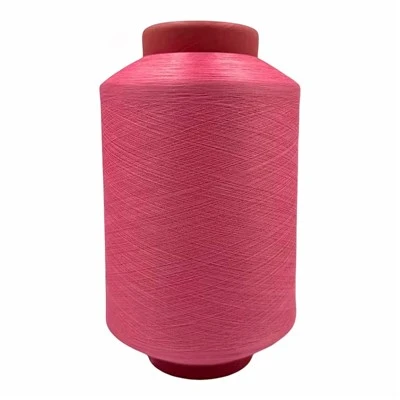
If you’re a textile mill, apparel brand, or other business looking for reliable RCY that’s designed to be easy to store and process, feel free to reach out to us to discuss your needs. We offer a range of RCY grades for every application, and we provide storage guidelines tailored to your specific operating environment to help you get the most out of your material.
DTY Nylon Yarn References
- Textile Institute. (2019). Storage and Handling of Rubber Covered Yarns. Textile Industry Best Practices Guide.
- Rubber Manufacturers Association. (2021). Effects of Environmental Stressors on Synthetic and Natural Rubber Elastomers. Technical Bulletin No. 124.
- American Association of Textile Chemists and Colorists (AATCC). (2020). Humidity Control for Textile Storage and Processing. AATCC Technical Manual.
- Smith, L. (2018). Common Storage Mistakes That Degrade Textile Raw Materials. Textile World Magazine.
Zhuji Yuanhui Import & Export Co., Ltd.
Zhuji Yuanhui Import & Export Co., Ltd. is one of the most professional rubber covered yarn manufacturers and suppliers in China. With abundant experience, we warmly welcome you to buy high-end rubber covered yarn made in China here from our factory. If you have any enquiry about quotation and free sample, please feel free to email us.
Address: No.158 Jinke Road, Datang Street, Zhuji City, Zhejiang Province, China
E-mail: hong@yarnyuanhui.com
WebSite: https://www.yarnfty.com/
