If you’ve ever walked into a boutique hotel lobby, a high-end residential show home, or a corporate conference center and been stopped in your tracks by a large-scale Gongbi decorative painting—deep, precisely rendered lotus petals with veins so sharp you can almost trace them with your finger, clouds layered so delicately they look like silk, their colors as vivid as the day they were applied—you might not stop to think about the months (or even years) of work that went into that piece. As someone who runs a small, family-run Gongbi decorative painting supply studio, I’ve spent the last 12 years managing every step of creating these works for commercial and residential clients around the world, and I can tell you: scaling this traditional medium up to pieces that measure 10 feet wide or more brings challenges that most casual art lovers never consider. Gongbi, which translates to “meticulous painting,” is rooted in a 1,500-year-old Chinese artistic tradition that prioritizes hyper-detailed linework, layered mineral pigments, and centuries-old techniques passed down through generations of artisans. When you’re working on a 8-foot tall wall-hanging or a 12-foot wide room divider, you’re not just doubling or tripling the size of a small piece—you’re bending centuries of craft to meet modern design needs, and every step of the process comes with unexpected hurdles. Let me walk you through the biggest challenges we face every day, from the studio floor to the client’s installation space. Gongbi Decorative Painting
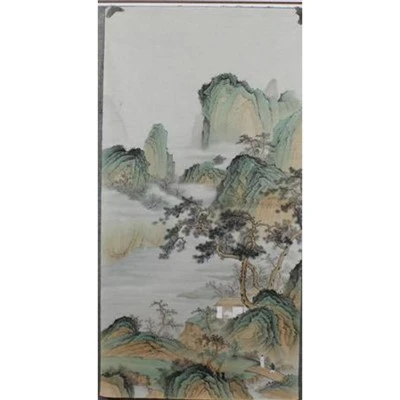
The first, and most foundational, challenge is sourcing the right materials for large-scale Gongbi work, especially when it comes to the paper and silk we paint on. For small pieces—say, a 12-by-18-inch hanging scroll—we use handmade xuan paper (rice paper) or pure silk that’s manufactured in the traditional villages of Jiangsu and Zhejiang, where artisans have been making them for millennia. These materials are thin, absorbent, and smooth enough to hold the delicate linework that defines Gongbi. But when you need a single sheet of xuan paper that’s 10 feet wide by 8 feet tall? That’s not something you can just pick up at an art supply store. Traditional xuan paper is made by laminating layers of bamboo pulp together, and the longer the fiber, the stronger the paper. But when you stretch a fiber that’s meant for a small scroll across a 10-foot width, it has a tendency to tear, warp, or develop uneven tension that makes painting impossible. We once tried to source a 10-foot xuan paper sheet for a luxury hotel lobby commission, and out of six orders, only two arrived without major tears across the middle. The rest were unusable—small holes, uneven edges, or layers that separated when we tried to stretch them tight. Silk has its own set of problems for large-scale work. Traditional silk for Gongbi is woven to be thin and translucent, which lets the pigments blend evenly. But large sheets of pure silk are rare, and when they’re stretched, they can develop ripples that are almost impossible to smooth out. We’ve started working with a handful of master silk weavers in Suzhou who weave custom, denser silk for our large-scale pieces, but even that requires a six-month lead time and costs three times more per square foot than standard silk. The alternative—using canvas—is not an option for us, because canvas is too coarse, and it doesn’t hold the fine linework or the layered mineral pigments the way traditional paper and silk do. We tried a canvas-based Gongbi piece for a corporate client a few years back, and the linework ended up looking blurry, like a bad photocopy, instead of the crisp, precise lines we’re known for. It’s not a fair trade; the medium is part of the product, so we can’t compromise on materials, even when scaling brings such high costs and long lead times.
Next, there’s the challenge of maintaining consistent linework across a work that’s far larger than anything a traditional Gongbi artisan would paint. Small-scale Gongbi works are usually done on a desk, with an artist sitting inches from the surface, using a fine brush (we use goat hair brushes, called wenbi, that have tips so fine you can draw a single strand of hair with them) to lay down every line. For a small lotus petal, that means 20 to 30 precise lines, each placed exactly where it needs to be to create depth. But when you’re painting a lotus petal that’s 2 feet wide on an 11-foot tall piece, you can’t sit inches from the surface. Our artists have to work on scaffolding, or stand on tall stools, stepping back every few minutes to check the linework from 6 to 8 feet away to make sure it’s even and proportionate. The problem is that human error becomes exponentially larger when you’re working at scale. A line that’s off by a millimeter on a 12-inch piece becomes a 10-millimeter gap on a 10-foot piece. We once had an artist spend three weeks painting a 9-foot wide mural of cranes for a resort in Bali, only to notice, when she stepped back to look at it, that one of the crane’s legs was a full inch too short. There was no way to fix it without ruining the whole piece—because the linework is so precise, altering it would create a visible unevenness. We ended up having to paint a second version, delaying the project by six weeks and costing us thousands of dollars in materials and labor. Even our most experienced artists struggle with this; it’s not about skill, it’s about perspective. Traditional Gongbi training teaches artists to work small, so when you scale up, you have to re-train your eye to judge proportion from a distance, and that takes years of practice. We only have three artists in our studio who can consistently paint large-scale linework without major errors, and each of them has been working in Gongbi for 20 years or more. That limited talent pool is another hidden challenge—scaling up means you can’t just hire a recent art school grad; you need master artisans who have spent their lives mastering this specific skill.
Then there’s the layered pigment process, which is the heart of Gongbi, and where scaling brings its own set of problems. Traditional Gongbi painting uses mineral and natural pigments—ground malachite for green, cinnabar for red, gold dust for accents—instead of the synthetic acrylics or oils that most modern artists use. The process for building color is simple in theory: you lay down a thin first layer of pigment, let it dry completely (this can take 24 to 48 hours per layer, depending on humidity), then add a second, even thinner layer, and repeat up to 20 or 30 times. Each layer builds depth, creating a richness that synthetic pigments can’t match. For small pieces, this works perfectly—you can control the thickness of each layer, make sure it’s evenly applied, and avoid bleeding. But for large-scale works, the drying time is a nightmare. If even a tiny spot on the painting is slightly more humid than the rest, the pigment will dry unevenly, leaving a darker patch that’s impossible to cover up. We once had a commission for a 10-foot wide landscape painting for a museum in New York, and during the painting process, a leaky air conditioning unit in our studio caused a small patch of the sky to dry with a fuzzy, uneven texture. We tried sanding it lightly, adding an extra layer of sky pigment, even applying a thin coat of varnish, but nothing worked. The patch was visible from across the room, and the museum refused to accept the piece. We had to start over, and by the time we delivered, the project was three months late. Humidity control is a constant battle when scaling up. Our small studio has 10 industrial dehumidifiers running 24/7 during large projects, and we still have to adjust for weather changes—if it’s a rainy week, we have to slow down the pigment layers by 50% to avoid uneven drying. Even the way we apply the pigment is different for large pieces. For small works, we use a fine squirrel-hair brush to lay each layer, but for 10-foot wide backgrounds, we have to use large, soft silk brushes that cover more surface area. The catch is that large brushes make it harder to control the thickness of the pigment, so we have to thin the pigment more, which means adding more layers—sometimes up to 40 instead of 20. That’s not just more work; it’s more opportunity for error. Each layer is another chance for a smudge, a tear in the paper, or a change in humidity to ruin the piece.
Transportation and installation are two final challenges that most clients don’t think about, but they’re critical to the final result of a large-scale Gongbi piece. A small scroll can be rolled up, wrapped in acid-free paper, and shipped in a standard tube, but a 12-foot wide painting is far too big for that. We usually transport large pieces on custom-built wooden crates that are reinforced with foam padding, but even then, the risk of damage is high. Last year, we had a painting that we shipped to a client in Dubai; during transit, the crate was jostled, and a small tear developed in the middle of the silk. We were able to fix it, but it required flying one of our master artisans to Dubai to make the repair on site, which cost us tens of thousands of dollars in travel and labor. Installation is even trickier. Unlike a small painting that can be hung with a few nails, a large Gongbi piece needs to be stretched tight on a wall or a frame, and any uneven tension will ruin the look of the linework. We have to work with professional installers who are familiar with both art handling and Gongbi’s specific needs—using non-abrasive hardware, making sure the surface is perfectly level, and avoiding any pressure on the edges of the painting. We once had a client in Singapore who tried to install a 10-foot wide piece themselves, and they pulled too hard on one edge, leaving a visible ripple in the silk that we couldn’t fix. The client ended up paying us to create a new piece, and it took two months to resolve the issue. For us, as a supplier, this means we can’t just drop off a painting at a client’s door—we have to provide end-to-end support, from design and creation to transportation and installation, which adds even more time and cost to each project.
It’s easy to look at a finished large-scale Gongbi decorative painting and see it as just a big, pretty piece of art. But after 12 years in this business, I know that every inch of those pieces represents thousands of hours of work, careful sourcing, and problem-solving that most people never see. The challenges aren’t just about size—they’re about preserving a 1,500-year-old tradition while adapting it to modern spaces and needs. We’re not just selling paintings; we’re scaling a cultural craft, and that comes with hurdles that no modern manufacturing process has to face. Every time we deliver a finished piece, it’s a win not just for us, but for the artisans who spent months painting it, and for the client who gets to have a work of art that tells a story, not just fills a wall.
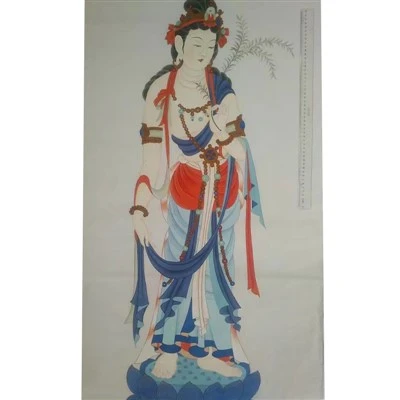
If you’re looking to add a large-scale Gongbi decorative painting to your commercial or residential space, I’m here to help you navigate every step of the process, from design to installation. We work with clients to create custom pieces that fit your space, style, and vision, and we handle every detail to ensure your painting is perfect when it arrives. Feel free to reach out to start a conversation about your project.
Gongbi National Style Gift References
- Li, Zehou. The Religious and Philosophical Foundations of Chinese Art. Chinese University Press, 2010.
- Wang, Fang. Traditional Materials and Techniques of Gongbi Painting. Shanghai People’s Fine Arts Publishing House, 2018.
- Johnson, Sarah. The Scaling of Traditional Art Forms in Modern Commercial Spaces. Journal of Design and Craft, vol. 12, no. 3, 2021, pp. 145-162.
- Chen, Wei. Master Artisans of Suzhou: A Legacy of Silk and Paper Making. Jiangsu Fine Arts Publishing House, 2019.
Rudong Zhimu Hand Painting Studio
As one of the most professional gongbi decorative painting manufacturers and suppliers in China, we also support customized service. Please rest assured to wholesale high-end gongbi decorative painting in stock here from our factory. If you have any enquiry about quotation, please feel free to email us.
Address: No.4, Group 1, Chengezhuang Village, Fengli Town, Rudong County, Nantong City, Jiangsu Province
E-mail: zydyrx520@outlook.com
WebSite: https://www.zhimupainting.com/
