As a supplier of reach-in refrigerators, one of the most common questions I hear from commercial kitchen operators, bar owners, and even small café owners is: “Can I stack reach-in refrigerators to save floor space?” It makes sense—commercial kitchen real estate is precious, and every square foot saved goes toward more prep area, customer seating, or storage for dry goods. But when it comes to stacking these heavy, temperature-controlled appliances, it’s not just about shoving one on top of the other. After 12 years in the industry, I’ve seen both the benefits of smart stacking and the costly mistakes that come from cutting corners. Today, I’m breaking down the science, the industry standards, and what you need to know to make the right call. Reach-in Refrigerator
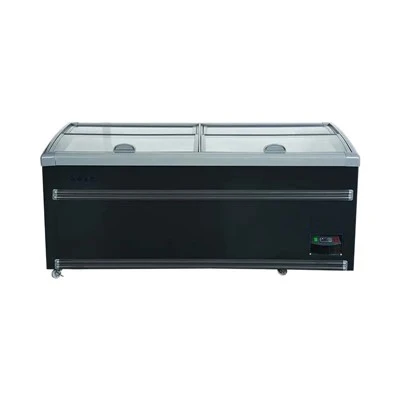
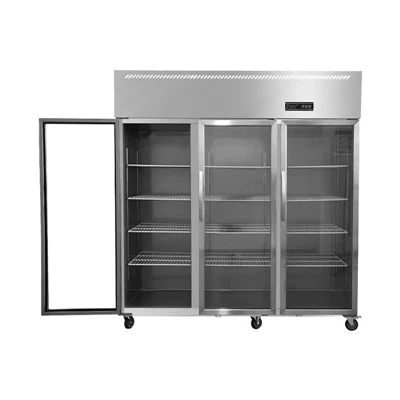
First, let’s get clear on what a standard reach-in refrigerator is. Unlike residential mini-fridges, commercial reach-ins are built for continuous, heavy use. They have thicker insulation, compressors sized to maintain consistent temperatures 24/7, and a galvanized steel exterior and interior to handle spills, heavy item movement, and regular cleaning. Most models range from 24 to 72 inches wide, 30 to 36 inches deep, and 78 to 84 inches tall—with a standard single-door unit weighing between 250 and 450 pounds, and double-door units tipping the scale at 500 to 700 pounds before you even add food, beverages, or shelving. That weight is non-negotiable, and it’s where the biggest challenges of stacking come in.
The first thing to consider is structural integrity. Reach-in refrigerators are engineered to stand alone, not to bear the weight of another appliance on top. The metal frames that support the doors, hold the interior shelves, and house the compressor are designed for vertical load only up to their own footprint, not double the weight. When you stack a second unit, the lower one has to support not just its own weight, but the full weight of the upper unit, plus any contents inside both. That puts extreme stress on the lower unit’s top frame, which is usually thinner than the load-bearing frame around the bottom. Over time, this stress can cause the top of the lower unit to bow, bend, or even crack the insulation. I’ve seen more than one customer come to me with a $1,500 repair bill because their stacked lower unit’s door wouldn’t seal properly anymore—bowed frame meant a gap that let cold air escape, driving up energy bills and risking spoilage.
But it’s not just the lower unit’s frame. The upper unit also has unique risks. Reach-in refrigerators rely on airflow to keep their components cool. The condenser coils, which release heat, are usually either on the back or the bottom of the unit. If you place a unit on top of another, you’re blocking the airflow for the upper unit’s compressor, and the lower unit’s coils are also trapped between the two. Poor airflow causes the compressors to work harder to maintain temperature, which not only shortens the lifespan of both units but can also lead to inconsistent cooling. For example, a customer in a coffee shop in Portland tried stacking two of our 48-inch double-door reach-ins last year. Within six months, the upper unit’s compressor burned out—our service team traced it to blocked airflow from the lower unit’s top panel. They ended up having to replace both compressors, costing them nearly $2,000. That’s way more than the cost of a separate storage solution would have been.
Now, that doesn’t mean stacking is entirely impossible. There are specific cases where it’s done safely—usually in non-commercial settings like small basements, or in cases where units are purpose-built for stacking. Wait, hold on: do we have stackable reach-in refrigerators? Yes, some specialty units are designed with reinforced top frames, elevated condenser coils, and mounting points to lock the upper unit securely to the lower one. These models are engineered to bear the additional load, and they have cutouts in the top panel to allow airflow between the two units. But these aren’t your standard off-the-shelf reach-ins. Most of our catalog doesn’t include stackable models because most commercial customers don’t need them, and they come with a higher price tag due to the reinforced construction. So if you’re considering stacking standard units, that’s a hard no from our experience.
Wait, but what about alternative solutions that save space without the risks? That’s where I can speak from direct experience. One of the most popular options for customers who are tight on floor space is to use a reach-in refrigerator with a countertop or a base cabinet. For example, our undercounter reach-ins can be paired with a work surface to create a prep area on top, so you’re using the same footprint for storage and work. Another option is a reach-in with a narrow footprint—our 24-inch wide models are perfect for tight corridors that would otherwise be wasted. We also offer rolling reach-in units, so you can move them into different areas of the kitchen when you need space for events or big prep days. All of these options are designed to be safe, energy-efficient, and compliant with commercial health codes, which is a big plus for restaurant owners.
Speaking of health codes, that’s another point I need to emphasize. Local health departments for foodservice have specific regulations about commercial refrigeration placement. Most of them require that refrigeration units are installed in a way that allows for proper ventilation around all sides to prevent mold growth, pest infestations, and cross-contamination. Stacking two units blocks ventilation on their adjacent sides, which can lead to moisture buildup and fail inspections. I had a customer in Chicago who ran a deli get a $500 fine because their stacked units didn’t have enough clearance around them, and the health inspector found mold on the back of the lower unit. That’s a cost no business owner wants to deal with, especially on top of the equipment investment.
Let’s talk about weight specifically, because it’s easy to underestimate. A standard 72-inch double-door reach-in holds about 1,000 pounds of food and beverages on average. So two stacked units would mean the lower one is supporting 1,500 to 2,000 pounds total. That’s a huge amount of weight on a frame that’s not designed for it. Even if the frame doesn’t bend right away, over time, the vibration from the compressors running 24/7 will loosen the joints, leading to gaps, leaks, and premature failure. We’ve tested our units in our warehouse, and our structural engineers say that stacking two standard units without reinforcement reduces the lifespan of both by at least 30 percent. For a commercial refrigerator that’s supposed to last 10 to 15 years, that cuts that lifespan down to 7 to 10 years—meaning you’ll be replacing them sooner, which is a big expense.
But wait, I know some of you are thinking: “I saw a stacked reach-in at a restaurant downtown, it’s been there for years.” That’s possible, but it’s often a custom setup, not standard units. The restaurant might have bought special stackable units, added structural supports to the lower unit, or placed them in a wide-open area with extra ventilation. Or maybe it’s a residential unit used in a residential setting, which isn’t subject to the same commercial standards. I once worked with a small café owner who tried stacking two residential reach-ins because he thought commercial ones were too big. Within a year, the lower unit’s door wouldn’t stay closed, and the upper unit had to be moved because it was leaking refrigerant. Residential units aren’t built for commercial use at all, so stacking them is even riskier.
So what should you do if you’re short on space, but still need more refrigeration capacity? Here’s what I recommend to all our customers. First, measure your space carefully. Many people think they need a bigger refrigerator, but they just haven’t measured the vertical space they’re not using. If your ceiling is 10 feet tall, a standard 84-inch reach-in leaves 16 inches of empty space above it. A lot of customers don’t realize they can use that space for open shelving, dry storage, or even a small prep table, instead of stacking refrigerators. Second, check your local regulations. Before you make any changes to your kitchen layout, call your local health department to ask about refrigeration placement rules. It’s better to do that upfront than to get a fine later. Third, talk to a supplier who knows commercial refrigeration. Not all suppliers are equal—some will just sell you any unit, even if it’s not right for your space. Our team does a free site assessment for every customer, where we measure their kitchen, look at their storage needs, and recommend the best setup, whether that’s multiple smaller units, a custom size, or even a combination of reach-ins and undercounter models.
I also want to address a common myth: stacking refrigerators will save you money. On the surface, it seems like you’re using less floor space, so you don’t have to rent a bigger kitchen. But in reality, the cost of repairing damaged units, failing inspections, and replacing them sooner often adds up to more than the cost of a properly spaced setup. A friend of mine owns a restaurant in Boston, and he initially tried stacking two reach-ins to save $200 a month on rent for a larger kitchen. Within a year, he spent $2,500 on repairs and a $1,000 health fine, and he ended up moving to a larger kitchen anyway because the stacked units couldn’t hold all his inventory. It backfired entirely.
Now, if you’re still set on stacking, let me leave you with a few safety tips, even if I don’t recommend it. First, only use units that are specifically designed for stacking. Ask your supplier about stackable models—they should have reinforced frames and ventilation cutouts. Second, make sure to secure the upper unit to the lower one with mounting brackets, so it doesn’t slide off. Third, leave at least 6 inches of clearance around all sides of both units, including between the two stacked units, to allow for airflow. Fourth, have a professional inspect the setup every six months to check for structural stress, door seal gaps, and compressor performance. But again, even with these steps, it’s not as reliable as a proper standalone setup.
Ice Maker At the end of the day, commercial reach-in refrigerators are a big investment, and their job is to keep your food safe and fresh. Cutting corners on stacking might seem like a quick fix, but it can lead to major headaches down the line. As someone who’s been in this industry for years, I’ve seen too many businesses struggle with issues that could have been avoided by planning their refrigeration space wisely. If you’re in the market for new reach-in refrigerators, or you’re just looking to optimize your current setup, I’m here to help. Our team can work with you to find the right units, the right layout, and the right solution that fits your space and your budget.
References
- National Restaurant Association. (2022). Commercial Kitchen Refrigeration Best Practices.
- Underwriters Laboratories (UL). (2021). Safety Standard for Commercial Refrigerators and Freezers.
- Food and Drug Administration (FDA). (2020). Food Service Establishment Refrigeration and Storage Guidelines.
- Commercial Refrigeration Manufacturers Association (CRMA). (2023). Structural Load Requirements for Reach-In Refrigerators.
Zhejiang Xingbao Electrical Appliances Co., Ltd.
As one of the most professional reach-in refrigerator manufacturers and suppliers in China, we also support customized service. Welcome to wholesale bulk high quality reach-in refrigerator in stock here from our factory. If you have any enquiry about pricelist, please feel free to email us.
Address: No. 10 Baisha Road, Lianhang Development Zone, Chang’an Town, Haining City, Jiaxing City, Zhejiang Province, China
E-mail: zjxingbao@gmail.com
WebSite: https://www.sunborncn.com/
