If you’ve ever worked with carbon steel pipes (or had to source them for a project), you’ve definitely heard the term “pressure rating” thrown around. At our carbon steel pipe supplier, this is one of the first questions we get from plumbers, construction managers, oil and gas crew, even DIYers trying to tackle a big home renovation. Most folks don’t just want a vague answer like “it holds pressure.” They need to know exactly what that number means, how it’s calculated, and why guessing with this stuff is a terrible idea (we’ve seen way too many horror stories of improperly rated pipes bursting mid-job). Let’s break this down like we’re chatting over a coffee, no stuffy engineering jargon unless it’s actually useful. Carbon Steel Pipe
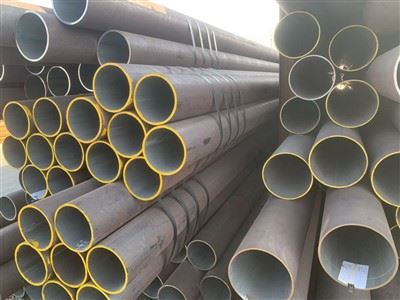
First off, what even is a pressure rating? Simply put, it’s the maximum amount of internal pressure a carbon steel pipe can safely handle over a specific period of time—usually 10 years of continuous operation, for the record. Think of it like a water bottle: squeeze it too hard and it pops, only this is a pipe that might be carrying hot water, natural gas, or even corrosive chemicals, so the stakes are way higher than a spilled beverage.
Wait, but here’s the thing I wish more people knew: that number isn’t a random sticker slapped on a pipe. It’s calculated based on three main factors: the pipe’s wall thickness, its outer diameter, and the material’s tensile strength—how much force the steel can take before it actually breaks. Carbon steel isn’t a one-size-fits-all material either, right? There are different grades, like A53, A106, A500, and so on, each with slightly different tensile strengths, which changes their pressure ratings. That’s why two pipes that look almost identical might have totally different safe pressure limits.
Let’s get into the math part, but keep it simple (I promise, no calculus). The basic formula for pressure rating (often called PR for short in the industry) is: PR = (2 * S * t) / D. Here, S is the tensile strength of the steel grade, t is the wall thickness (in inches, usually), and D is the outer diameter. Let’s use a real example to make this concrete. Take a common A106 Grade B carbon steel pipe—this is the workhorse for oil and gas and hot water lines, by the way. Its tensile strength is around 60,000 psi (pounds per square inch, that’s the unit we use here). If we have a 2-inch outer diameter pipe with a 0.154-inch wall thickness, plugging into the formula gives us: (2 * 60,000 * 0.154) / 2 = 9,240 psi. Wait, that seems super high, right? But hold up—we never use the full tensile strength. Engineers apply a safety factor, usually around 4:1 for carbon steel, so that rating drops to around 2,310 psi. That’s the actual working pressure we’d recommend for daily use. The safety factor is non-negotiable, by the way. No one uses the full theoretical limit because things change: temperature fluctuates, the pipe might get scratched during installation, or corrosion could eat away a tiny bit of the wall over time. Cut that safety factor and you’re just asking for a leak or a rupture.
Speaking of temperature—this is a huge mistake we see all the time. The pressure rating of carbon steel pipes drops as the temperature goes up. Steel gets softer when it’s hot, so it can’t hold the same pressure as it does at room temperature. For example, that same A106 Grade B pipe I mentioned earlier? At 100°F (normal room temp), its working pressure is ~2,300 psi. But crank the temp up to 500°F, and that drops to around 1,500 psi. At 750°F (super hot, like for steam lines), it’s down to just over 800 psi. If you’re running a pipe for a boiler or a steam system and use the room-temperature rating, you’re gonna have a bad time. A lot of new guys forget this, and we spend way too much time troubleshooting pressure issues that could’ve been avoided by just checking the temperature correction chart. That’s why we always ask for two things first when someone reaches out: what’s the pipe carrying, and what’s the max temperature of that fluid. It saves everyone a headache.
Now, how are these ratings labeled? You’ll see them on the pipe’s specs, usually paired with the schedule number—Schedule 40, Schedule 80, Schedule 160, those are the common ones. Wait, is schedule number the same as pressure rating? No, not exactly, but they’re closely related. Schedule 40 is the standard for most general use plumbing—for a 2-inch A53 Schedule 40 pipe, that’s roughly 1,400 psi working pressure at room temp. Schedule 80 has a thicker wall, so higher pressure—same 2-inch pipe, Schedule 80 is around 2,200 psi. Schedule 160 is even thicker, for heavy-duty stuff like high-pressure gas lines. But like I said earlier, schedule is a general guideline, not a hard rule. A 3-inch Schedule 40 pipe from a higher-grade carbon steel will have a higher pressure rating than a 3-inch Schedule 40 from a lower grade. Always check the actual specs, not just the schedule number.
Another big one: corrosion and external damage. A pipe might have a perfect pressure rating on paper, but if it’s sitting outside for six months getting rained on and starts rusting, that wall thickness shrinks, and so does its pressure rating. We had a client a few years back who bought cheap carbon steel pipes for an outdoor irrigation project, stored them uncovered for three months, and by the time they installed them, the wall thickness was down 10% from the original. That dropped their pressure rating by the same percentage, and they ended up with burst lines all summer. It’s not just about the rating from the mill—it’s about how the pipe is handled and stored once it leaves our warehouse. We always remind folks to keep pipes covered, off the ground, and away from corrosive materials (like fertilizer or chemical drums) if they’re not going to install them right away.
What about standards? Because pressure ratings aren’t just made up. Most carbon steel pipes in the US follow ASME B31 series standards—ASME B31.1 for power piping, B31.3 for process piping, B31.9 for building services. These standards outline exactly how to calculate pressure ratings, the safety factors to use, and temperature correction factors. If a pipe isn’t certified to meet ASME specs, we can’t in good conscience sell it to anyone. Cut corners on certified material, and you’re responsible for whatever happens if that pipe fails. We’ve seen contractors go with unrated pipes to save a few bucks, and when a line burst in a municipal water system, they got hit with huge fines and repairs. It’s never worth the cost.
Wait, let’s address a common myth we hear all the time: “I can use a higher pressure rating pipe than I need, just to be safe.” Is that okay? Mostly, yeah—thicker wall pipes are more durable, hold up better to corrosion, and can handle unexpected spikes in pressure (like water hammer, that loud bang you hear when a valve closes too fast). But it’s not free. Thicker wall pipes cost more, and they’re heavier, which means more labor to install, more support for the lines, etc. So it’s a balance: don’t go way overkill, but don’t go just under the exact needed rating either. That’s what we help clients figure out—we look at their project specs, their fluid, their temp, and give them a recommendation that’s safe but also cost-effective.
Let’s talk about some real-world use cases to make this less abstract. If you’re running a residential water main, that’s usually Schedule 40 A53 pipe, working pressure around 1,400 psi—way more than the 80-100 psi your home’s system uses, which is perfect. For a small natural gas line to a stove or water heater, same Schedule 40, that’s fine. But if you’re running a high-pressure air line for an industrial machine, you’ll need Schedule 80 or even Schedule 160, because air pressure can hit 100+ psi, and you need that extra wall thickness. For oil and gas pipelines that carry crude oil hundreds of miles, those are super high-grade carbon steel, often Schedule 160 or thicker, with pressure ratings in the thousands of psi, because they need to push that oil long distances.
What about testing? How do you know a pipe is actually holding its rated pressure? Most reputable suppliers like us (cough, that’s us) do hydrostatic testing on batches before they ship. Hydrostatic testing means filling the pipe with water, pressurizing it beyond the working pressure, and holding it for a set amount of time (usually 10 minutes) to make sure there are no leaks or deformations. That’s a quality check, not just a formality. If a pipe passes hydro testing, you can trust its pressure rating is accurate. Cheap, uncertified pipes skip this step, so you never know if they’ll hold up.
Now, let’s get to the mistakes we see that cost people the most. First, ignoring temperature. This is number one. We had a food processing plant client last year that installed a steam line with A106 pipe, used the room-temperature rating, and the steam was at 600°F. The pipe started leaking within a month, and they had to shut down production for 3 days to replace it—cost them way more than if they’d just checked the temperature correction. Second, not accounting for corrosion over time. Even if you use the correct rating, steel corrodes, so you need to build a little buffer for that, or use coated carbon steel (like galvanized, or epoxy coated) if it’s going in a humid or corrosive environment. Third, assuming schedule is enough. A lot of guys memorize Schedule 40 = 1,500 psi, but that’s only for 2-inch A53. A 6-inch Schedule 40 A106 pipe has a higher pressure rating, around 1,800 psi, so don’t just go by the number on the pipe.

At the end of the day, pressure ratings for carbon steel pipes aren’t just a number on a spec sheet. They’re a safety measure, a quality benchmark, and a way to make sure your project doesn’t go sideways. We’re not just selling pipes—we’re helping people avoid costly mistakes and keep their jobs safe. If you’re working on a project and have questions about pressure ratings, need to confirm a spec, or just want to pick the right pipe for your needs, hit us up. We can walk you through the math, the standards, and even help you source the exact material that fits your budget and requirements. No stuffy sales talk, just straight answers based on years of working with carbon steel pipes every day.
Stainless Steel Plate Sheet References:
- ASME B31.1-2022, Power Piping, American Society of Mechanical Engineers
- ASME B31.3-2023, Process Piping, American Society of Mechanical Engineers
- “Carbon Steel Pipe Pressure Rating: A Practical Guide”, American Petroleum Institute (API) Publication 5L
- “Pipe Wall Thickness and Pressure Rating Calculations”, Piping Systems Design Handbook, 5th Edition
Shandong Henry Group Co., Ltd.
As one of the most professional carbon steel pipe manufacturers and suppliers in China since 1995, we’re featured by quality products and good price. Please rest assured to buy premium carbon steel pipe for sale here from our factory. Contact us for more details.
Address: No. 2688 Meili Road, Meilihu Office, Huaiyin District, Jinan City
E-mail: sales01@henry-china.com
WebSite: https://www.henry-steelpipe.com/
