Hey, quick heads up if you’re deep in the weeds sourcing precision parts—this isn’t some generic, textbook-heavy rant. As a precision parts supplier who’s been grinding (pun very much intended) in this game for 12 years, I’ve seen first-hand how skipping even a tiny chemical property check can turn a $500 prototype run into a $10k disaster that puts your whole project on ice. Let’s cut the corporate jargon and talk real, make-or-break stuff that actually matters for parts that have to hold up, move, or stay accurate when the pressure’s on. Precision Parts
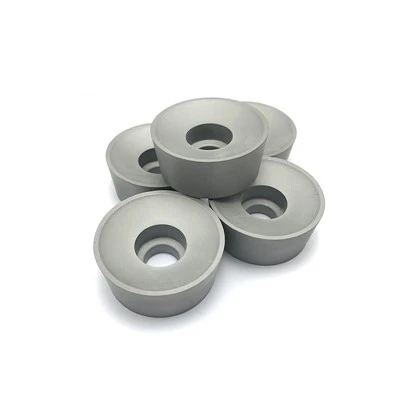
First off, let’s get clear: when we’re talking precision parts, we’re not churning out lawnmower brackets that get rained on occasionally. These are parts going into aerospace landing gear, medical surgical tools that get steam-sterilized, semiconductor fabrication equipment that has to move 0.001mm without fail, or automotive EV batteries that sit in 100°F engine bays for 10 years. So their chemical properties aren’t just “nice to have”—they’re non-negotiable. Let’s start with the big one that most new guys sleep on: corrosion resistance, but not just any corrosion resistance. It has to be specific to your operating environment. A 316 stainless steel part for a food processing line that only deals with mild salt brine is different from the same steel used in a marine drone’s prop shaft that’s submerged in saltwater 24/7. I had a client a few years back who ordered 200 titanium sensor housings for a offshore wind farm—they thought standard grade 5 Ti was enough, but guess what? Standard Ti 6Al-4V picks up chloride ion corrosion way faster in saltwater, so half their sensors failed in 6 months. We had to rework them with a certified passivation treatment and double-check their chromium oxide layer uniformity, and that cost them a ton of downtime. Moral of the story: corrosion resistance isn’t a one-size-fits-all check. It has to align with every chemical exposure your part will face—acidic cleaners, road salt, steam, industrial fumes, even sweat if it’s a wearable medical part. If you skip that, you’re basically handing your client a ticking time bomb.
Next up, chemical stability under thermal stress. Precision parts often go through wild temperature swings—like that semiconductor part that’s in a clean room that’s 68°F during the day, but the processing chamber jumps to 150°C for lithography, then cools back down in minutes. If the part’s chemical structure breaks down or reacts when heated (or cooled), you’re looking at dimensional drift—meaning a part that’s supposed to be 10mm wide is suddenly 9.999mm, which is a disaster for a chip that has to fit exactly right. I worked with a micro-machining client once who used aluminum parts for a 5G filter; the aluminum reacted with residual cleaning chemicals in the chamber when heated, creating a thin oxide layer that threw their frequency tolerance off by 10%, making their entire batch of filters useless. We switched them to a stabilized aluminum alloy with a copper additive that prevents that thermal chemical reaction, and their yield went from 60% to 98% almost overnight. That’s the kind of small, targeted chemical property check that makes precision parts actually precision.
Then there’s chemical compatibility with whatever other materials your part is mating with. This is a huge one that gets overlooked all the time because people think “metal is metal” or “plastic is plastic.” Nope. If you have a steel bolt pressing against a aluminum bracket, the two different metals can cause galvanic corrosion if there’s any moisture or conductive fluid between them. I had a automotive client a while back who installed steel fasteners on aluminum EV battery trays—within 2 years, the contact point corroded so bad the bolts snapped, risking battery failure. We started recommending zinc-plated steel fasteners with a barrier coating, and that issue went away. It’s not just metals, either: plastic bushings mating with stainless steel shafts, ceramic bearings with titanium housings—all of them have to be checked for compatibility. Even the smallest amount of dissimilar material contact can lead to a chemical reaction that eats away at the mating surfaces, ruining dimensional accuracy and causing part failure.
Wait, let’s not forget about resistance to chemical degradation from cleaning or sterilization processes. Medical parts, semiconductor parts, even food processing parts get cleaned constantly, often with harsh chemicals. Autoclave sterilization uses high-temperature steam and sometimes hydrogen peroxide plasma, and if a part’s material breaks down in that environment, it can leach chemicals into whatever it’s touching—huge no-no for medical devices that go inside the human body. Semiconductor parts need to resist acid-based cleaners like hydrofluoric acid without getting pitted or corroded, because even a tiny pit can mess with the flatness of a wafer. We had a medical tool client who ordered stainless steel surgical blades and thought standard passivation was enough, but their sterilization process used alkaline glutaraldehyde that reacted with the blade’s chromium layer, making it dull faster and also leaving a residue. We switched them to a higher-purity stainless with a custom passivation that’s resistant to that specific chemical, and their blade lifespan doubled. That’s the kind of granular check that separates a good precision supplier from a great one—we don’t just look at the material specs on the data sheet, we ask what it’s going to be exposed to, how often, and for how long.
Another big one that’s super relevant for precision parts: low outgassing. If you’re making parts for space, semiconductors, or even high-end optical equipment, outgassing is a silent killer. Outgassing is when volatile chemicals in the part’s material evaporate when exposed to vacuum or high temperatures, leaving a residue that can mess with optical surfaces, contaminate semiconductor wafers, or even clog small moving parts in space equipment. I can’t tell you how many times we’ve had aerospace clients come to us saying, “Our last supplier’s part left a residue on the lens and ruined $50k worth of optics.” We test every precision part we make for outgassing per NASA’s ASTM E595 standard—meaning we test for total mass loss (TML) and collected volatile condensable materials (CVCM) under vacuum at 125°C for 24 hours. If a part even has a tiny amount of residual lubricant or plasticizer that outgasses, we catch it before it leaves our shop. That’s not overkill—that’s the difference between a part that works and a part that costs your client millions.
Now, let’s talk about how we handle this at our shop, because this isn’t just theory. When a client sends us a precision part order, our first question isn’t “what material do you want?” it’s “what environment will this part live in?” and “what’s your failure threshold?” Let’s say someone orders a 5mm titanium pin for a semiconductor pick-and-place robot. We don’t just grab Ti grade 5 and machine it. We ask: is it going to be exposed to hydrochloric acid cleaners? Will it see temperature swings from 25°C to 200°C? Does it need to pass NASA outgassing tests? Then we pick the right material, test its corrosion resistance to HCl, test its dimensional stability at 200°C, run outgassing checks, and do a mated compatibility test with the ceramic tooling it works with. We also do post-machining treatments—like passivation, coating, or heat treatment—that boost the exact chemical properties it needs, not a generic treatment that works for everything.
I know a lot of clients get stuck on material costs, but here’s the thing: cutting corners on chemical properties is way more expensive in the long run. A $20 extra charge for a passivated titanium pin that resists HCl is nothing compared to the cost of a botched wafer run that shuts down a $100k/hour fab line. Or the cost of recalling a medical device because a part corroded and leached chemicals into a patient. At the end of the day, precision parts don’t just need to be accurate to a micrometer—they need to stay accurate, and function correctly, for their entire lifecycle. That means their chemical properties have to be tailored to their exact job, not just the generic specs on a data sheet.
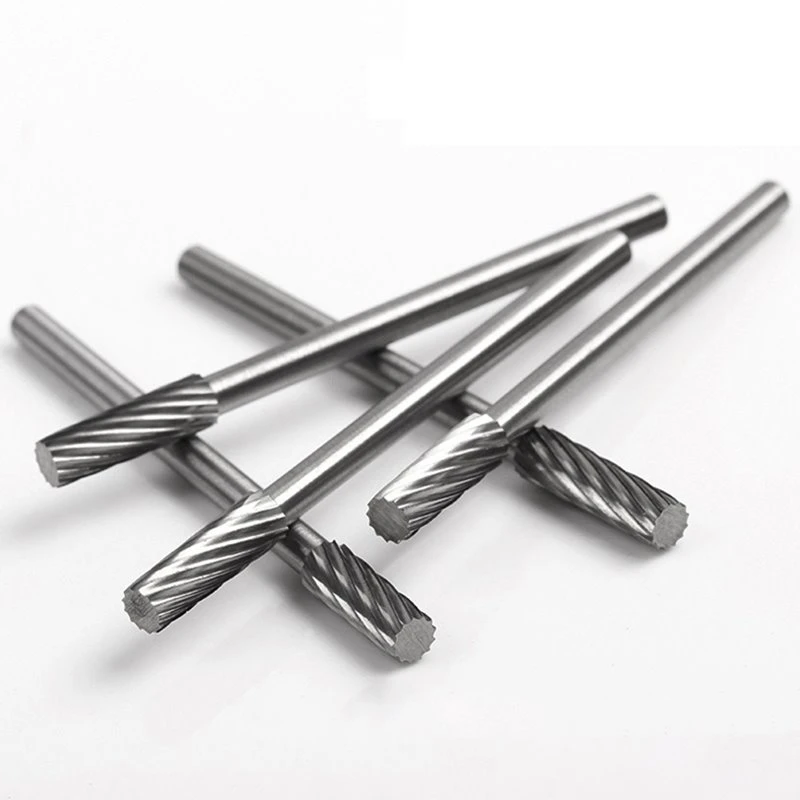
If you’re working on a project where a part’s failure isn’t an option—whether that’s a medical device, an aerospace component, a semiconductor tool, or a high-performance automotive part—you can’t afford to skip these checks. We’ve got 12 years of experience working with engineers across industries, testing every material we use for the exact chemical conditions your parts will face, and delivering precision parts that don’t just meet specs—they hold up when it matters most. If you’re tired of parts that fail because of cheap, generic chemical checks, hit us up to talk through your project, no pressure, no salesy garbage. We’ll walk through exactly what chemical properties your parts need, test them, and deliver exactly what you need without the headaches.
Moulded Profile Material REFERENCES:
ASTM E595 Standard Test Method for Total Mass Loss and Collected Volatile Condensable Materials from Outgassing in Vacuum
ASM Handbook Volume 13B: Corrosion: Materials and Concepts
ISO 10271:2011 Dentistry – Metallic materials for dental restorations and prostheses
Kunshan Zhiyi Dingli Cemented Carbide Tool Co., Ltd.
We are one of the most professional precision parts manufacturers and suppliers in China, also support customized service. We warmly welcome you to wholesale high quality precision parts made in China here from our factory. If you have any enquiry about cooperation, please feel free to email us.
Address: No. 80 Chuangfu Road, Qiandeng Town, Mondragon Industrial Park, Kunshan City, Suzhou, Jiangsu, China.
E-mail: 2060056236@qq.com
WebSite: https://www.kszydl.net/
