Hey everyone, and welcome back to my corner of the industrial space—today we’re diving into something I get asked about all the time: how annealing furnaces actually change the microstructure of materials. As someone who’s been selling these furnaces for over 10 years (yep, I’m the guy you reach out to when you need reliable annealing gear), I swear this stuff isn’t just for textbooks—understanding it directly affects how your parts perform, last longer, and save you cash down the line. Annealing Furnace

First off, let’s keep this real—microstructure is basically the tiny, unseen “building blocks” of metal, plastic, ceramic, whatever material you’re working with. Think of it like a Lego set: if your blocks are all jumbled up, the whole structure is wobbly; if they’re stacked neat, it’s strong and consistent. Annealing furnaces are the tool that rearranges those blocks for the better. No jargon, promise—just let’s break it down step by step.
Let’s start with why you’d even bother with annealing. If you’ve ever machined a part, bent a metal sheet, or rolled a coil, you’ve probably created “internal stress” in the material. That stress’s like carrying a backpack full of uneven rocks—your material’s constantly fighting that tension, which makes it brittle, prone to cracking, or even hard to work with later. Annealing fixes that, and all starts with how the furnace heats and cools the material.
Here’s the thing: not all furnaces are created equal. I’ve seen guys buy cheap off-the-shelf models that either heat too fast or cool too quick, and they wonder why their parts still crack. The best annealing furnaces I sell let you control two key things: temperature and soak time. Let’s take steel, since it’s the most common material we work with. For low-carbon steel, you typically heat it to between 1100°F and 1300°F—wait, that’s way below its melting point, right? Melting’s when the blocks turn liquid; annealing is when you get them warm enough that they can shift positions, but stay solid. That’s called the “recrystallization temperature” for the material, and every metal has its own sweet spot.
Once it hits that temp, you hold it there for a set time— that’s the “soak” part. Why? Because it takes a minute for all those tiny, disorganized crystal grains to rearrange themselves. If you rush it, some grains are still messed up, and you’re back to square one. For example, if you’ve got a cold-rolled steel part that’s super hard because you bent it into shape, a good soak in the furnace will let those stretched, deformed grains recrystallize into new, rounder, more uniform grains. That turns a brittle, hard part into something ductile—meaning you can bend it more without breaking it, and it’s way easier to machine without snapping tools.
Now, how does the furnace’s cooling step matter? Super important. If you cool it way too fast (like yanking it out and blasting it with cold air), those new grains don’t have time to settle properly—you get a different, sometimes unwanted microstructure, called martensite. Martensite is super hard, but also super brittle—great for knives, bad for a part that needs to flex, like a car suspension bracket. That’s why we use two main annealing types: full annealing and stress-relief annealing. Full annealing uses slow cooling in the furnace, which gives you that soft, ductile uniform microstructure. Stress-relief annealing is lower temp, shorter soak, and slower cool—perfect for parts that don’t need a full makeover, just to take the edge off the machining stress.
I’ve had a customer call me last year panicking because their small engine components were cracking after machining. They were using a cheap furnace that heated unevenly—one side of each part was 50°F hotter than the other, so the microstructure on that side was all messed up, making it brittle. We swapped them for our batch annealing furnaces, which use forced circulation to heat every part evenly, no hot spots. After annealing, their defect rate dropped by 30% within a month—they saved thousands on scrap parts and downtime. That’s the kind of real win I see every week, and it all boils down to how the furnace controls that microstructure.
Wait, let’s talk about other materials too—because it’s not just steel. Aluminum is another big one. Aluminum’s recrystallization temp is lower, around 650°F, so you don’t want to overheat it—you’ll get grain growth, where the grains get too big, and that makes the aluminum weak instead of strong. Our furnaces have precise temp controls (within ±5°F, for those who care about specs) so you nail that temp every time. I had a guy in the aerospace industry working with aluminum alloy 6061—he was annealing it before forming, and his old furnace was hitting 700°F, so grains were growing too much, and his formed parts were failing stress tests. Switching to our conveyor annealing line, which keeps the temp locked right at 650°F, fixed that. His parts now pass all tests, and he’s ordering two more lines for his new production run.
Another point: annealing isn’t just for getting softer. Sometimes you want a specific mix of strength and ductility, and tweaking the furnace’s time and temp gets you that. For example, if you’re making metal fasteners, you might do a partial anneal—heat it just enough to soften the head, but leave the shank a bit harder so it doesn’t bend when you tighten it. Only a furnace with precise zone controls can pull that off, because you’re not heating the whole part evenly. Our multi-zone furnaces let you adjust temp in different sections of the chamber, so each part is treated exactly how you need it.
Let me address a common myth I hear all the time: “I can just use my oven at home for small parts, right?” Maybe for a tiny test piece, but industrial parts? No way. Home ovens have hot spots, can’t hold a consistent temp, and cool way too fast. The microstructure you get is random—one part is soft, the next is hard, you get scrap. Our furnaces are built for consistency, which is non-negotiable when you’re making parts for cars, appliances, or medical devices. Medical parts, for example, can’t have inconsistent microstructure—if they do, they might fail inside someone’s body, which is a total no-go.
So what’s actually happening at the atomic level, for the nerds out there (that’s me, honestly)? When you heat the material to recrystallization temp, the atoms get enough energy to move past their neighbors, breaking up the deformed grain boundaries that formed during machining or forming. New, strain-free crystal nuclei form, grow, and replace the old, messy grains. The soak time lets those nuclei grow into uniform grains, and slow cooling gives the atoms time to arrange themselves correctly without leftover stress. A bad furnace cuts this process short—so you still have those strained grain boundaries, leading to inconsistent material properties.
I don’t sell furnaces that are just boxes that heat up—they’re tools that directly impact your product quality and bottom line. Last quarter, a customer in the construction industry was paying 15% scrap because of annealing-related defects. After switching to our roller hearth annealing furnace, their scrap rate dropped to 2%—that’s tens of thousands of dollars saved every month. The key was that our furnace provides uniform heat and controlled cooling, so every part’s microstructure is exactly what it’s supposed to be.
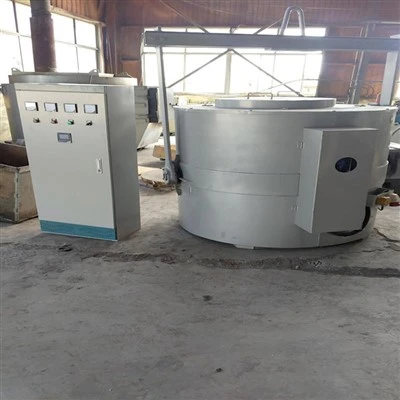
Here’s the thing I want you to take away: the annealing furnace isn’t an afterthought in your production line—it’s a critical piece that shapes how your material performs. A good furnace doesn’t just “anneal” parts; it refines the microstructure, eliminates stress, and makes your parts stronger, more reliable, and cheaper to make. If you’re tired of scrap, inconsistent parts, or downtime from bad heat treatment, let’s chat. I don’t do pushy sales—we’ll walk through your process, figure out exactly what furnace you need, and make sure it fits your budget and your production goals. Drop me a line, and let’s work out a solution that works for you.
Crucible Furnace References
- Callister, W. D., & Rethwisch, D. G. (2018). Materials Science and Engineering: An Introduction. Wiley.
- Semiatin, S. L. (Ed.). (2015). ASM Handbook: Volume 4: Heat Treating. ASM International.
- Cottrell, A. H. (1957). Dislocations and Plastic Flow in Crystals. Oxford University Press.
Danyang Dingfeng Industrial Furnace Co., Ltd.
Danyang Dingfeng Industrial Furnace Co., Ltd. is one of the most experienced annealing furnace manufacturers and suppliers in China, also supports customized service with low price. Please feel free to wholesale high quality annealing furnace made in China here from our factory. For pricelist, contact us now.
Address: Lizhuang Economic Development Zone, Danyang City
E-mail: saleszk@dffurnace.com
WebSite: https://www.dffurnace.com/
