If you’re in manufacturing, you’ve probably spent way too many late nights stressing over whether your production line can keep up with demand—without sacrificing quality. Let’s cut to the chase: as a customized riveting machine supplier, I get this question all the time, and it’s one of the most common (and most important) ones I field. The short answer? Yes, a customized riveting machine absolutely works for mass production. But let’s get into why that’s not just a yes, but why it’s often the smartest choice you can make for scaling up. Customized Riveting Machine
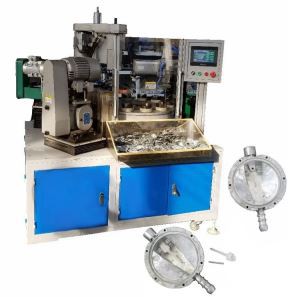
First, let’s bust a myth. A lot of people think “customized” is just a fancy term for a small, one-off machine for a unique prototype or a tiny batch. That’s so 2010. Back in the day, off-the-shelf riveters were the go-to because they were cheap and easy to get. But those machines are built for general use—they can handle a few different rivet sizes, maybe a couple of material types, but they’re not optimized for your specific part. And when you’re doing mass production, that “not optimized” part turns into problems: slower cycle times, more downtime, higher defect rates, way more waste. That’s where customized machines come in. They’re built exactly for your product, your assembly line, your output goals.
Let’s break down the practical stuff. Say you’re making a batch of automotive brake caliper brackets. These need a specific type of rivet, a precise press force, and they have to go together 24/7 with zero mistakes. An off-the-shelf riveter? It might take 12 seconds per bracket, but a customized one we build for you? It’s calibrated exactly to that brake caliper’s rivet spec, maybe with an auto-feeder that loads the rivets without stopping the line, so it’s knocking out one every 6 seconds. Double the speed, no wasted time feeding rivets, no adjusting settings between runs. For mass production, that adds up. If you’re doing 100,000 brackets a month, that’s 100,000 extra units per month—no overtime, no hiring more line workers, just more output. And the best part? The machine is built to run that fast, 16 hours a day, 6 days a week, without burning out. Off-the-shelf models often aren’t rated for that kind of continuous use; they’re designed for light industrial, not high-volume mass production.
Another big win with customized machines for mass production: consistency. When you’re making millions of the same part, even a tiny variation in rivet depth or press force can lead to defects. One bad part means a warranty claim, a recall, or worse—safety issues if it’s a car part or an appliance. Customized machines have built-in sensors that lock into your exact tolerances. For example, if your part requires a rivet head that’s 3mm above the base material, the machine won’t run until it hits exactly that. If the rivet feed is off, it stops automatically instead of pushing a bad part down the line. Off-the-shelf machines might have basic sensors, but they’re not tailored to your quality standards. I’ve had customers switch from a standard riveter to our customized model and cut their defect rate from 2% to 0.1% overnight. For a company making 1 million parts a year, that’s 19,000 fewer defects—huge cost savings, no headaches with quality checks.
Wait, but what about costs? A lot of people hem and haw at first because they think a customized machine is way more expensive than an off-the-shelf one. Let’s do the math, quick. Let’s say an off-the-shelf riveter costs $5,000, and a customized one costs $15,000. On paper, that’s a $10,000 difference. But over a year, the customized machine runs twice as fast, so you’re producing twice as many parts. You’re also spending less on labor (no workers adjusting the machine every hour), less on scrap materials (fewer bad parts), and less on maintenance (the customized parts fit better, so less wear and tear). I’ve had a customer in the furniture industry pay off their customized riveting machine in 8 months. By month 9, they were saving $20,000 a month on production costs. Off-the-shelf machines have lower upfront costs, but they end up costing you way more in the long run when you’re scaling. They’re also rigid—if you switch to a slightly different part, you have to buy a whole new machine. Customized machines can be adjusted, upgraded, or reprogrammed for minor changes, so you don’t have to reinvest every time your product evolves. That’s a big one for mass production, where product lines sometimes shift to meet customer demand.
But here’s the catch: customized doesn’t mean overcomplicated. A lot of suppliers (not naming names) will build a machine that has 100 extra features you don’t need, just to jack up the price. No, a good customized machine is built around your specific process, not the other way around. When we work with a customer, we start with the basics: what’s the part? What rivets are you using? How fast do you need to make it? Where does this machine fit in your existing line? (Do you need it to connect to your conveyor belt? Work with your current robots?) We don’t add stuff just for show. One of our customers in electronics was making wireless earbuds, with tiny rivets holding the charger case together. They initially asked for a machine with a fancy touchscreen interface. But after talking, we realized all they needed was a compact, high-precision riveter that could sync with their existing assembly robot. The touchscreen was unnecessary, so we cut that, knocked 20% off the cost, and they had a machine that fit perfectly in their tight production space. That’s how it should work—customized to your needs, not a one-size-fits-all with extra fluff.
I know some of you are still thinking, “But mass production means standardization—why change from what I’ve been using?” Let me tell you a story from a customer of mine that used a standard riveter for 5 years before switching. They made metal brackets for lawn mowers, doing 50,000 a month. The problem? They were having so many issues: rivets getting jammed, parts coming out with uneven rivet depth, line stops that lasted 20 minutes each. They were losing 10 hours a week to downtime. When they built their customized riveter, it had an auto-alignment system for the rivets, a feeder that never jammed, and sensors that alerted workers before a problem happened. Downtime dropped to 2 hours a week, they increased their output by 30%, and their defect rate went from 3% to 0.5%. They told us that within a year, the customized machine had added $180,000 in extra profit. That’s not a small number. That’s the difference between falling behind and keeping up with demand.
Now, let’s talk about the common hesitations. One is lead time. People think “custom” means waiting 12 weeks or more. Sure, some complex customized machines take a bit longer, but for most mass production riveting applications, we can have a prototype built in 4-6 weeks, and the final machine in 8-10 weeks. That’s way faster than you think, especially when you’re looking at scaling—you can’t afford to wait 6 months for a machine when demand is picking up. Another hesitation: maintenance. “If it’s customized, will parts be hard to find?” No—we build our customized machines using standard, industrial-grade parts wherever possible, and we have a team on call to help with any issues, same-day if needed. We also provide a maintenance plan tailored to your machine, so you don’t have to fix it on the fly. For mass production, uptime is everything, so we make sure the machine is designed to be easy to service.
Wait, let’s address a specific scenario: what if your mass production runs multiple products? Can a customized machine handle that? Yes, if we build in flexibility. For example, if you make two similar parts, we can program the machine to switch between them in 2 minutes, instead of the 30 minutes it would take with an off-the-shelf riveter. We can add quick-change tooling so you don’t have to call a technician every time you switch a product. That’s a huge benefit for manufacturers that have multiple lines or seasonal demand shifts. You don’t need a separate machine for every part—one customized machine can handle your whole product range.
I want to make this relatable, not just a sales pitch. Let’s say you’re a small to mid-sized manufacturer that’s just starting to scale. You’ve got 5 workers on the line, a standard riveter, and you’re getting orders that are twice as big as you can handle right now. Buying another standard riveter would cost $5,000, but you’d still have downtime, defects, and the same slow cycle times. A customized machine, built for your exact part, would cost more upfront, but it would let you take on those extra orders without hiring more workers, without paying overtime, and without risking quality. That’s the real value for mass production. It’s not just about a machine—it’s about a tool that grows with your business, eliminates the bottlenecks in your line, and keeps your costs low even when output is high.
I’ve had customers come to me after trying 2 or 3 off-the-shelf machines that just didn’t work for their mass production needs. They tell me, “I wish I’d known about customized machines sooner.” The truth is, customized riveting machines aren’t just for big corporations with huge factories. They’re for any manufacturer that wants to scale efficiently, reduce waste, and keep up with demand. If you’re currently dealing with slow cycle times, frequent line stops, or high defect rates because your standard riveter isn’t cut out for your mass production, a customized solution is worth considering.
Let’s wrap this up: Can a customized riveting machine be used for mass production? 100% yes. It’s designed for exactly that: continuous, high-volume, consistent output. The benefits—faster cycle times, lower defects, less downtime, lower long-term costs—far outweigh the slightly higher upfront investment, especially when you’re scaling. The key is working with a supplier that listens to your needs, doesn’t overcomplicate things, and builds a machine that fits your specific line, parts, and goals.

If you’re ready to stop fighting with your current riveting setup and start scaling your mass production efficiently, we can help. Reach out to us to talk through your needs, get a custom quote, and see how a customized riveting machine can make your line faster, more reliable, and more profitable.
Customized Riveting Machine References
- Industrial Maintenance & Plant Operations. (2022). "Custom Assembly Tools: A Solution for High-Volume Manufacturing."
- Manufacturing Engineering Society International Conference. (2021). "Rivet Quality Control in Mass Production: The Role of Customized Assembly Equipment."
- Journal of Manufacturing Systems. (2020). "Cost-Benefit Analysis of Customized Production Equipment for Small-to-Mid Scale Manufacturers."
- Assembly Magazine. (2023). "How Customized Riveting Machines Reduce Downtime in High-Volume Assembly Lines.
Ruian Hensen Automatic Machinery Co., Ltd.
Ruian Hensen Automatic Machinery Co., Ltd. is well-known as one of the leading customized riveting machine manufacturers and suppliers in China, featured by quality products and good price. Please feel free to buy customized riveting machine made in China here from our factory. Contact us for quotation.
Address: No.199, 3rd Kaifa road, Dongshan industrial area, Ruian, Zhejiang China
E-mail: ymy3562@vip.163.com
WebSite: https://www.hensen-machine.com/
