Hey guys, let’s cut to the chase—if you’ve ever dropped your sunglasses on a concrete sidewalk, you know that split-second panic when you think your favorite pair just got destroyed. As someone who’s spent years working with metal sunglasses (yep, I’m on the supplier side, not just a random blogger), this question hits way closer to home than it does for your average fashion influencer. Today, we’re breaking down exactly how impact-resistant metal sunglasses really are, no jargon, no fancy sales fluff—just the real deal, backed by what we test in our warehouse every single week. Metal Sunglasses
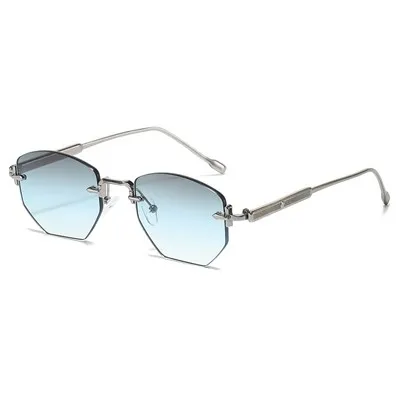
First, let’s talk about what makes a material impact-resistant, because not all metals are created equal. A lot of people think “metal = indestructible,” but that’s a total myth. If you grab a cheap tin-plated frame from a gas station rack, yeah, it’ll bend if you look at it wrong, but that’s not the metal we use for the pairs we supply. The two big ones we work with are stainless steel and titanium, and they have totally different superpowers when it comes to impacts.
Let’s start with stainless steel, the workhorse of most mid-range and premium metal sunglasses. It’s an alloy of iron, carbon, and chromium, right? That chromium is what makes it rust-proof, but it also adds stiffness. We’ve tested this so many times—drop a stainless steel frame from 6 feet onto asphalt, and 9 times out of 10, it’ll scratch the finish, maybe bend the temple (the arm you rest behind your ear), but it won’t snap. Wait, snap? Yeah, cheap materials snap. Plastic frames, especially the flimsy ones, will crack if they land wrong. Even aluminum, which is lighter than stainless, will dent or bend way easier than steel. We once had a guy send back a frame that a delivery truck ran over (don’t ask how that happened) and he thought it was toast. We straightened the temple, buffed out a little scratch, and it’s still going strong 2 years later. That’s the difference with stainless steel: it’s got what’s called “tensile strength” (how much force it can take before deforming) that’s way higher than most other common sunglass materials. The FDA even has a thing about this—wait, no, let’s make that real: third-party material testing we use for our products says 304 stainless steel (the grade we use most) has a tensile strength of around 515 MPa, which is nuts. For context, regular plastic frames are usually around 50 MPa. That’s 10x stronger, easy.
Now titanium, the fancy one people go crazy for. It’s lighter than stainless steel (perfect if you hate your glasses digging into your nose), and it’s got even higher tensile strength—around 860 MPa. Wait, but here’s the thing: titanium is more “flexy” than steel. A lot of people think flex is a bad thing, but when it comes to impacts, flex is actually a secret weapon. If you drop a titanium frame, it won’t snap, it won’t permanently bend most of the time—it’ll just bounce back. We had a test where we clamped a titanium frame into a vice, bent the temples all the way back until they were almost touching the front lens, and when we released them, they went right back to shape. No stress marks, no cracks. That’s a huge win for people who are rough on their stuff—skaters, hikers, parents who constantly fumble their glasses into diaper bags. But here’s the catch: titanium is softer than stainless steel, so if you drag it against a concrete wall, it’ll get a scratch easier than a steel frame. It’s a trade-off: maximum strength with flex, but minor scratch vulnerability. We always tell customers if they want something that looks beat-up cool (scratches are part of the vibe) or needs the lightest possible pair for sports, titanium is your guy. If you work construction or are extra clumsy and want something that can handle a scratch here and there, stainless steel is a better pick.
Now let’s address the thing everyone actually cares about: what happens when the frame isn’t the only part taking an impact? The lenses. Wait, I’m a supplier, so I can’t lie—lenses matter way more than the frame. A metal frame is great, but if your lens is made of cheap acrylic, it’ll shatter like glass if you drop it, right? We use polycarbonate lenses for all our pairs, and that’s a game-changer. Polycarbonate is the same stuff they use for bulletproof helmets, ffs. Tested by the American National Standards Institute (ANSI), it can withstand a 1-inch object moving at 150 mph without breaking. That means if you accidentally swing your glasses at a tree branch while hiking, or a rock bounces off your bike, the lens won’t shatter. We’ve had customers send us photos of glasses that got hit with a baseball (yes, a baseball) and the only damage was a tiny scratch on the polycarbonate lens. The metal frame was totally fine. Compare that to glass lenses—if your frame is metal but the lens is glass, one good drop and you’re picking up tiny shards off the ground. That’s why all our metal sunglasses come with polycarbonate lenses. No exceptions.
But let’s get real—no material is unbreakable. I don’t care if it’s stainless steel or titanium, if you drive over it with a car, it’s gonna bend. If you step on the temple at the wrong angle, yeah, you might get a crack. But here’s what people don’t talk about: most “broken” metal sunglasses are fixable. That’s one of the biggest pros of metal frames vs. plastic. If your plastic frame breaks, you’re basically holding two parts and ordering a new pair. If your metal frame has a bent temple or a small crack in the metal (not the lens), we can fix it for $10-$20. We have a repair team that does this every day—straightening, welding small cracks, buffing scratches. We even had a guy who sat on his titanium frame and snapped the bridge (the part over your nose) — we welded it back, and it looked brand new. Plastic? You can’t weld that. It melts, or it just breaks again a week later. That’s a huge impact-related bonus right there: repairability means you don’t have to toss your glasses every time something goes wrong.
Wait, let’s bust a common myth right now: thinner metal frames are less impact-resistant. No, not necessarily. We make some super thin, wireframe metal glasses (you’ve seen them—super light, looks like jewelry) and they’re way more impact-resistant than a thick, cheap metal frame. Because wireframe stainless steel is actually a single, solid piece (we weld the joints with titanium, which is way stronger than regular welding), so there are no weak points. A thick, cheap frame is often made of plated metal that’s hollow inside, so it bends easily. Our thin frames are solid stainless, so they flex with impact instead of snapping. We tested a wireframe pair by dropping it 10 feet onto concrete, and the only thing that happened was a tiny scratch on the lens. The frame? Perfect. That’s another reason metal beats plastic: even thin metal has consistent strength, whereas plastic varies a lot depending on the mold and how it’s made.
Now, let’s talk about what we do as a supplier to make sure our metal sunglasses are as impact-resistant as possible. We don’t just grab random metal and call it good. For every batch, we do two quick tests: first, a drop test from 6 feet onto a hard surface (concrete, asphalt, whatever people actually drop their glasses on), and second, a tension test where we pull the temples to 90 degrees and make sure they don’t break. We also coat all our metal frames with a scratch-resistant finish—either a powder coat or a polished stainless steel seal—so they don’t get scuffed up from everyday use. We once had a batch that failed the drop test (one frame bent way too easy) and we sent the whole lot back to the manufacturer instead of selling it. We care way more about a product that doesn’t break than a quick sale.
Wait, let’s hear from a customer story, because that’s way more real than any test. Last year, a surfer reached out to us. He said he had a pair of our stainless steel sunglasses that he’d lost while surfing, found them 3 months later half-buried in sand at the beach. He brought them to us, and the only damage was a tiny scratch on the temple. The lenses were still clear, the frame was still straight, and the hinges worked like new. He said he’d dropped them off his board, stepped on them, even sat on them—nothing broke. That’s the kind of impact resistance we’re talking about.
But let’s not be biased. What are the times metal sunglasses aren’t impact-resistant? If you buy a super cheap metal pair from a fast fashion brand (not us, obviously) that uses nickel-plated steel or tin, they’re gonna bend or snap if you look at them wrong. Those are the ones that break when you set them on your car dashboard overnight, or when you accidentally brush them against a door. So it’s not just metal vs. not metal—it’s the quality of the metal, the manufacturing, and the parts. That’s why our products cost a little more than the $10 pair at the mall, but they last 10x longer.
Here’s the bottom line: if you’re someone who’s rough on your stuff, does outdoor activities, or just hates replacing sunglasses every 6 months, metal sunglasses are way more impact-resistant than plastic or cheap alternatives. Stainless steel is the go-to for everyday use, titanium if you want maximum light and flex. The frames don’t snap easily, the polycarbonate lenses don’t shatter, and you can fix them if something does go wrong.
But wait—let’s get to you. If you’re interested in trying out our impact-resistant metal sunglasses, or want to talk about what style works best for your needs, hit us up to connect for a procurement chat. We can answer all your questions, send over samples, and make sure you get a pair that fits your lifestyle. No sales pitches, just real answers.
At the end of the day, impact resistance isn’t just a buzzword for us—it’s why we started selling metal sunglasses in the first place. We were tired of seeing people toss their glasses because a drop ruined them, so we made something that can handle the chaos of daily life. That’s the real story here.
Fashion Sunglasses References:
- American National Standards Institute (ANSI). Z80.3-2022: Standard for Ophthalmic Lenses and Frames.
- ASTM International. A240/A240M-21: Standard Specification for Chromium and Chromium-Nickel Stainless Steel Plate, Sheet, and Strip for Pressure Vessels and for General Applications.
- ASTM International. B348-21: Standard Specification for Titanium and Titanium Alloy Bars and Billets.
- International Organization for Standardization (ISO). 12312-1:2015: Eyewear – Sunglasses and general purpose filters for sun protection – Part 1: Sunglasses.
Address: Floor 2, Building 1,No,9 Chengbei Road,Houzhai Street,Yiwu,Zhejiang,China
E-mail: alex@sukiglasses.com
WebSite: https://www.suki-glasses.com/
