In the realm of industrial automation, robotics, and countless other applications, the dynamic response of a Permanent Magnet DC (PMDC) motor is of paramount importance. As a supplier of PMDC motors, I’ve witnessed firsthand the critical role these motors play in driving various systems. In this blog, I’ll share some insights on how to enhance the dynamic response of PMDC motors, drawing from my experience in the industry. Permanent Magnet DC Moto
Understanding the Basics of PMDC Motors
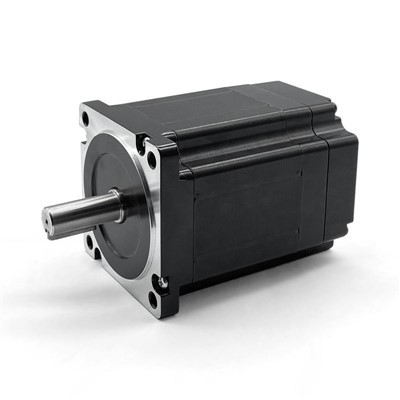
Before delving into the methods of improving dynamic response, it’s essential to understand the fundamental principles of PMDC motors. A PMDC motor consists of a permanent magnet stator and a wound rotor. When an electric current is applied to the rotor windings, a magnetic field is created, which interacts with the magnetic field of the permanent magnet stator, resulting in torque and rotation.
The dynamic response of a PMDC motor refers to its ability to quickly and accurately respond to changes in input signals, such as changes in speed or torque. A motor with a good dynamic response can reach the desired speed or torque quickly, with minimal overshoot and settling time.
Factors Affecting the Dynamic Response of PMDC Motors
Several factors can influence the dynamic response of PMDC motors. These include:
- Inertia: The inertia of the motor and the load it drives affects the motor’s ability to accelerate and decelerate quickly. A higher inertia requires more torque to change the speed, resulting in a slower dynamic response.
- Friction: Friction in the motor bearings, brushes, and other components can also affect the dynamic response. Higher friction can cause the motor to slow down and require more torque to maintain the desired speed.
- Back EMF: The back electromotive force (back EMF) generated by the motor is proportional to its speed. A higher back EMF can reduce the current flowing through the motor, making it more difficult to accelerate the motor quickly.
- Control System: The control system used to drive the PMDC motor plays a crucial role in its dynamic response. A well-designed control system can provide precise control of the motor’s speed and torque, resulting in a faster and more accurate dynamic response.
Methods to Improve the Dynamic Response of PMDC Motors
Now that we understand the factors affecting the dynamic response of PMDC motors, let’s explore some methods to improve it.
- Reduce Inertia: One of the most effective ways to improve the dynamic response of a PMDC motor is to reduce the inertia of the motor and the load it drives. This can be achieved by using lighter materials for the motor and the load, or by reducing the size of the load. For example, in a robotic arm application, using lightweight materials for the arm can significantly reduce the inertia and improve the dynamic response of the motor.
- Minimize Friction: Reducing friction in the motor bearings, brushes, and other components can also improve the dynamic response. This can be achieved by using high-quality bearings and brushes, and by lubricating the moving parts regularly. Additionally, using a motor with a low-friction design can also help to minimize friction and improve the dynamic response.
- Optimize the Control System: The control system used to drive the PMDC motor is critical for achieving a good dynamic response. A well-designed control system can provide precise control of the motor’s speed and torque, resulting in a faster and more accurate dynamic response. There are several types of control systems that can be used for PMDC motors, including proportional-integral-derivative (PID) controllers, fuzzy logic controllers, and neural network controllers. Each type of control system has its own advantages and disadvantages, and the choice of control system depends on the specific application requirements.
- Use a High-Power Supply: A high-power supply can provide the necessary current to accelerate the motor quickly, resulting in a faster dynamic response. However, it’s important to ensure that the power supply is compatible with the motor and the control system, and that it can provide a stable and reliable output.
- Implement Feedback Control: Feedback control is a technique that uses sensors to measure the motor’s speed, torque, or position, and adjusts the control signal accordingly. By implementing feedback control, the control system can continuously monitor the motor’s performance and make adjustments to ensure that it operates at the desired speed and torque. This can significantly improve the dynamic response of the motor, especially in applications where the load or operating conditions change frequently.
Case Study: Improving the Dynamic Response of a PMDC Motor in a Robotic Application
To illustrate the effectiveness of these methods, let’s consider a case study of a robotic application where a PMDC motor is used to drive the joints of a robotic arm. The original motor had a slow dynamic response, which limited the speed and accuracy of the robotic arm.
To improve the dynamic response, the following steps were taken:
- Reduce Inertia: The robotic arm was redesigned using lightweight materials, which reduced the inertia of the load. This allowed the motor to accelerate and decelerate more quickly, resulting in a faster dynamic response.
- Minimize Friction: High-quality bearings and brushes were used, and the moving parts were lubricated regularly. This reduced the friction in the motor and improved its efficiency, resulting in a faster dynamic response.
- Optimize the Control System: A PID controller was implemented to provide precise control of the motor’s speed and torque. The PID controller was tuned to optimize the dynamic response of the motor, resulting in a faster and more accurate response to changes in input signals.
- Use a High-Power Supply: A high-power supply was used to provide the necessary current to accelerate the motor quickly. This allowed the motor to reach the desired speed more quickly, resulting in a faster dynamic response.
- Implement Feedback Control: Encoders were used to measure the motor’s speed and position, and the control system was adjusted accordingly. This allowed the control system to continuously monitor the motor’s performance and make adjustments to ensure that it operated at the desired speed and position.
As a result of these improvements, the dynamic response of the PMDC motor was significantly improved. The robotic arm was able to move more quickly and accurately, resulting in increased productivity and efficiency.
Conclusion
In conclusion, improving the dynamic response of a PMDC motor is essential for achieving optimal performance in various applications. By understanding the factors affecting the dynamic response and implementing the methods discussed in this blog, you can significantly enhance the performance of your PMDC motors.
Switched Reluctance Motor As a supplier of PMDC motors, I’m committed to providing high-quality motors and technical support to help you achieve the best possible dynamic response. If you’re interested in learning more about our PMDC motors or need assistance with improving the dynamic response of your motors, please don’t hesitate to contact us for a procurement discussion. We look forward to working with you to meet your specific requirements.
References
- Krause, P. C., Wasynczuk, O., & Sudhoff, S. D. (2013). Analysis of electric machinery and drive systems. Wiley.
- Chapman, S. J. (2012). Electric machinery fundamentals. McGraw-Hill.
- Dorf, R. C., & Bishop, R. H. (2016). Modern control systems. Pearson.
Zibo Auric Mechanical and Electrical Technology Co., Ltd.
As one of the leading permanent magnet dc moto manufacturers and suppliers in China, we warmly welcome you to buy advanced permanent magnet dc moto for sale here from our factory. All customized motors are with high quality and competitive price.
Address: B419, High-tech Entrepreneurship Park, High-tech Zone, Zibo City
E-mail: cui@auricmotor.com
WebSite: https://www.auricmotor.com/
