Hey everyone, I’m Jake, and if you’ve ever ordered welded connection fittings from a supplier (shoutout to us, obviously), you’ve probably wondered why some parts feel like they hold up way better than others. Trust me, I get it—when you’re on the job site, the last thing you need is a fitting that cracks mid-weld or pulls apart before you even close up that pipeline. Over the 12 years I’ve been running our welded connection fittings business, I’ve lost count of how many times a contractor has asked me, “What actually makes a good welded fitting worth paying for? What do you even use to mark these things as acceptable?” That’s why I wanted to break down the real, actionable standards we live by every single day here, no fancy jargon or fluff. Welded Connection Fittings
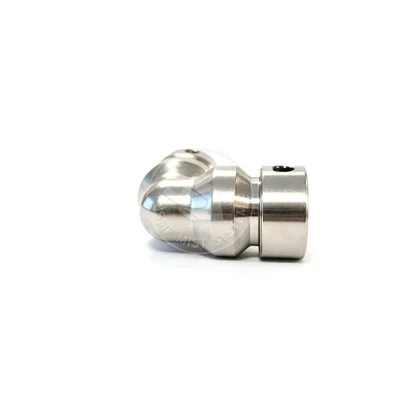
First off, let’s cut to the chase: marking welded connection fittings isn’t just some random sticker game. It’s how we (and, more importantly, third-party inspectors) prove a part is safe, meets code, and won’t let you down when you’re under pressure. A lot of new suppliers skip this step to save time, but that’s a fast track to calling your boss at 2 a.m. because a weld failed. Let’s start with the non-negotiable core standards from groups like ASME (American Society of Mechanical Engineers) and AWS (American Welding Society)—those are the big dogs everyone in the industry refers to, and we align every fitting we ship to them, full stop.
First big marking standard: material specs. This isn’t just slapping a “304 SS” sticker on a stainless steel fitting and calling it good. The mark has to be permanent—no peeling, no fading after a quick wipe with a degreaser, because inspectors need to verify the material mid-job, not just when it comes off the pallet. For example, if you order a butt-weld elbow for a natural gas line, it has to be marked with the exact material grade (like A234 WPB for carbon steel, or A403 WP304L for low-carbon stainless), the heat number from the mill it came from, and the yield strength. Why? Because different grades handle different temps and pressures—you can’t use a regular carbon steel fitting for a cryogenic service, and if the mark is gone, you can’t prove you didn’t mix up parts. We use laser etching for all our higher-spec fittings, not ink stamps, because ink can rub off during shipping or storage. For smaller fittings, we do deep-stamp marking that’s pressed into the metal, so it’s there forever.
Next up: size and dimension checks. This is where so many cutting corners go wrong. A fitting that’s supposed to be 4-inch schedule 40 might be off by 1/8 of an inch, and that throws off your weld gap, leading to a weak joint. The marking here? We mark the nominal size, the schedule (schedule 40, 80, etc.), and the type of fitting (elbow, tee, reducer, cap) right on the face or the end of the part—where it’s easy to read before you even pick it up. Wait, but what if you have a batch of 50 tees? We don’t mark every single one the same; we use a batch code that ties back to a dimensional inspection log. For every batch we run, we measure 10% of the parts to make sure their inside/outside diameters, wall thickness, and center-to-center dimensions are spot-on, and that batch code is marked on every part in the group. Last year, a contractor came to us with a bad batch from another supplier—their tees were 0.2 inches thinner than listed, and there was no batch code, so there was no way to track who made them. We never want our customers in that spot, so our marking system links every part back to a verified inspection.
Then there’s the weld quality itself—duh, it’s a welded connection fitting, so the weld zone has to be up to snuff. A lot of people forget that welded fittings aren’t just the base metal; the factory welds that join pieces to make the fitting (like a tee branch, for example) have to be tested too. How do we mark that? We have a specific “W” mark for factory-welded fittings, plus a code that tells you what weld procedure was used. For pressure-bearing fittings (think oil pipelines, water mains), we also mark if they passed non-destructive testing (NDT)—like ultrasonic testing or dye penetrant testing. No NDT mark means we haven’t checked for hidden cracks or porosity, and we will never ship a part without that mark if it’s for a pressure application. I’ve seen a job where a contractor used an unmarked factory tee that had a tiny weld crack inside, and it blew out 6 months later, closing a highway for 12 hours. That’s the stuff we work to prevent, which is why our NDT marks are only applied after a full third-party inspection, no exceptions.
Wait, let’s talk about special applications too, because not all fittings are for general use. If a fitting is for high-temperature service (like a furnace duct or a power plant boiler), we mark the maximum temperature it’s rated for—like 800°F or 1200°F. If it’s for corrosive environments (chemical plants, marine construction), we mark the corrosion resistance rating, like “CR1” for mild corrosion or “CR3” for heavy saltwater exposure. Last quarter, we supplied a bunch of fittings to a coastal wind farm project, and every part was marked with their marine-grade rating, so the electricians there didn’t accidentally use a regular carbon steel fitting that would rust through in 2 years. That’s the kind of detail that makes our customers trust us, right?
Now, what about the stuff you’re not supposed to mark? You’d be surprised—some suppliers try to stamp over part of the fitting that’s critical for welding, like the beveled end where you make your field weld. We never do that. Our marks are always placed on the flat, non-beveled face of the fitting, so they don’t get in the way when you’re prepping the weld joint. Also, we never mark over mill numbers—those are from the original steel manufacturer, and they’re super important for traceability if something goes wrong down the line. If you cover those, you might not be able to get a warranty or insurance coverage if there’s a failure, so we make sure to leave those untouched, or at least only add our marks in a clear, separate area.
I should also mention that all these marking standards are tied to compliance, and we don’t cut corners here. If a job requires AWS D1.1 certification (that’s the standard for structural welding), we mark every fitting with the AWS D1.1 logo plus our certification number. For ASME B16.9 (the go-to for factory-made butt-weld fittings), we stamp that B16.9 number right on the fitting, so inspectors can see at a glance it meets the code. A lot of small suppliers won’t get third-party certification because it costs money, but we’ve been audited by AWS three times in the last 5 years, and every audit passed with zero issues. That’s why we’re comfortable telling you our marks mean something—they’re not just for show.
Wait, let’s get real for a second. I know a lot of guys in the trade skip checking marks because they trust the supplier, but that’s a mistake. Last year, a guy I work with a lot came to me with a pallet of fittings he’d ordered from a overseas supplier, and half of them had no material marks—just a generic “steel” sticker that could mean anything. He ended up having to replace all of them at his own cost, because the mark issue meant they couldn’t pass inspection. That’s why as a supplier, our job isn’t just to sell you a fitting—it’s to make sure you can prove that fitting is good when you need it. The marking system we use isn’t a bureaucratic hoop; it’s a lifeline for your project.
Now, what if you get a fitting from us and the mark is missing? Don’t panic—we’ve all had shipping mishaps where a stamp rubs off, or a sticker falls off. Just shoot our team a message with the batch number or order number, and we can pull up all the inspection data for that part in 2 minutes. We keep digital records of every single fitting we ship, going back 8 years, so you never have to guess. That traceability is part of the marking process too—we don’t just mark the fitting; we link that mark to a digital trail that’s always accessible.
Let me wrap this up with a quick checklist you can use the next time you order or receive welded connection fittings, okay? First, check that all marks are permanent (laser etched or deep stamped, not ink). Second, verify the material grade, size, and schedule are clearly marked. Third, make sure there’s a code tied to the batch inspection and, if needed, NDT results. Fourth, confirm all compliance marks (AWS, ASME, etc.) are there. And fifth, double-check that marks aren’t covering critical weld areas or mill numbers. If you’re missing any of these, don’t use the part—reach out to your supplier, and if they can’t back it up, come talk to us.
Water Mist Sprinkler At the end of the day, we’re not just selling fittings; we’re part of your project. If a fitting you use from us fails, that’s our name on the line, and we take that way more seriously than any sale. So if you’re a contractor, project manager, or anyone in the market for reliable welded connection fittings that actually meet the standards we talked about, hit us up to chat. We can answer any questions, send over inspection certificates for any batch, or even walk you through our marking process in person if you want. No pressure, no sales pitch—just real info for real jobs.
References
- ASME B16.9, Factory-Made Wrought Steel Butt-Welding Fittings, American Society of Mechanical Engineers
- AWS D1.1, Structural Welding Code – Steel, American Welding Society
- NACE SP0178, Corrosion-Resistant Alloys for Oil and Gas Production, National Association of Corrosion Engineers
- API 5L, Line Pipe, American Petroleum Institute
Jinsheng Mist Forest-High Pressure Mist System
Jinsheng Mist Forest-High Pressure Mist System is one of the most experienced welded connection fittings manufacturers and suppliers in China, featured by quality products and low price. Please rest assured to wholesale bulk welded connection fittings in stock here and get pricelist from our factory. Customized orders are welcome.
Address: 109 Yonghong Road, Wenjiang District, Chengdu City, Sichuan Province, China
E-mail: 18190767523@163.com
WebSite: https://www.jswsmist.com/
