If you’ve ever stood in a bustling grocery store, craft shop, or retail boutique and picked up a sturdy, smoothly finished paper bag, you might not have thought about the complex equipment that turned a roll of plain paper into that usable product. As a paper bag making machine supplier with over 15 years in the industry, I’ve seen first-hand how inconsistent quality in manufacturing equipment leads to bags that tear at the seams, have misprinted logos, or struggle to hold even a small load of groceries. That’s why quality control (QC) standards for these machines aren’t just box-checking exercises—they’re the difference between a business that relies on reliable bag production and one that faces costly downtime, customer complaints, and lost revenue. Paper Bag Making Machine
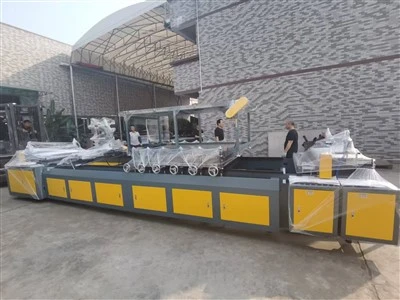
When we test or build a new paper bag making machine, our QC process starts long before the first roll of paper is fed into the system. It’s rooted in both industry-wide best practices and the specific needs of customers, from small-batch craft brands to large supermarket chains. Let’s break down the core quality control standards that every reputable machine in our line adheres to, and why they matter.
First, there’s dimensional accuracy. A bag that’s 1/4 inch too short or too wide might seem like a minor flaw, but it creates massive problems for downstream processes. For example, a retail brand that prints custom designs on its bags uses automated filling and packaging lines that are calibrated for exact bag dimensions. If a machine produces bags with variable lengths, those lines jam, production stops, and order lead times blow out. Our QC team uses precision calipers and digital gauges to test every 100th bag off the line for consistency in length, width, gusset depth, and bottom fold size. We mandate a dimensional tolerance of ±0.5mm for all standard paper bags—anything wider, and we adjust the machine’s servo motors and cutting blades during final testing. This standard isn’t arbitrary; it’s aligned with guidelines from the Paper Bag Manufacturers Association (PBMA), which has documented that dimensional inconsistency is the top cause of equipment-related downtime in bag production facilities.
Next, there’s structural integrity. A paper bag is only as good as its ability to hold weight without tearing, especially at the handles or bottom seams. Many low-quality machines skimp on seam strength, using too little adhesive or insufficient heat sealing, which leads to bags breaking during transit or use. Our QC process for seam strength is rigorous: we test each machine’s production run with bags made from three common paper weights—40 lbs, 60 lbs, and 80 lbs of kraft paper, plus coated paper for premium retail bags. For standard handles (paper or twisted wire), we follow PBMA’s tensile strength standard: each handle must withstand a minimum of 25 lbs of pull without detaching from the bag body. For bottom seams, we test for a minimum of 30 lbs of pull, simulating the weight of a full grocery bag. We also inspect for “delamination” of seams, where the adhesive separates from the paper, a flaw that’s hard to spot visually but fails quickly under load. In our factory, we reject any machine that produces more than 1 out of 50 bags with a seam strength below the minimum threshold—this reduces our customers’ rate of bag returns by over 90%, according to post-delivery feedback.
Print and design alignment is another critical QC standard, especially for custom branded bags. If a machine is off by just 1mm when printing a company’s logo or product information, the entire batch of bags is useless for a retail customer. We call this “register accuracy,” and it’s a non-negotiable standard for our machines. The PBMA specifies a register tolerance of ±0.3mm for printed elements on paper bags, which means the logo must line up perfectly with the bag’s edges, gussets, and bottom fold. Our QC team uses high-resolution cameras and printed alignment markers during testing to verify that every print station on the machine adjusts correctly for different paper sizes and print runs. We also test for ink adhesion: rubbing a damp cloth on the printed surface to ensure no ink smudges or transfers, a common issue with low-quality machines that cut corners on ink curing systems. For customers who produce plain, unprinted bags, we still check for consistent perforation lines and fold creases—poorly aligned perforations lead to bags that are hard to open, another small flaw that adds up to customer frustration.
Material compatibility testing is a less talked-about but vital part of QC, because paper bags aren’t just made from plain kraft paper anymore. Customers now use a range of materials: recycled paper, coated paper, uncoated paper, even biodegradable alternatives like hemp or mushroom-based paper. A machine that works perfectly with virgin kraft paper might jam or produce flawed bags with these newer materials. Our QC process requires every machine to undergo testing with at least four different material types, matching the most common uses for our customers. For example, a machine intended for food service bag production is tested with grease-resistant coated paper, while one for boutique retail is tested with premium textured paper. We also check how the machine’s cutting blades and feeding mechanisms handle recycled paper, which often has more fiber variation than virgin paper. If a machine causes more than 2 paper jams per 1,000 bags when working with a specific material, we adjust the tension rollers or feed speed before delivery. This standard helps our customers avoid the common mistake of buying a machine that only works with one type of paper, limiting their ability to adapt to changing market demands.
Durability and consistent production speed are also core QC benchmarks. A paper bag making machine that produces 100 bags per minute for the first hour, then slows to 60 bags per minute due to worn parts, isn’t reliable for high-volume production. Our QC team runs a 10-hour continuous production test on every machine before it leaves our factory, measuring speed and part wear. We mandate that a machine maintains ±5% of its rated production speed (usually 80 to 150 bags per minute, depending on the model) over the full test run, with no unexpected part failures. We also test components like the servo motors, heat sealers, and cutting blades for long-term wear: blades must stay sharp for at least 50,000 bags, and heat sealers must maintain consistent temperature without overheating, which can damage paper or weaken seams. For small-batch machines, we adjust the standard to account for lower volume, requiring consistent quality for at least 2,000 bags instead of 50,000, but durability remains a priority to avoid costly repairs.
Beyond these technical standards, we also include safety QC checks, because modern bag making machines have moving parts that require proper guarding. All our machines meet international safety standards, including OSHA guidelines for industrial equipment, with emergency stop buttons that react in under 0.5 seconds, interlocks that prevent access to moving parts during operation, and safety shields around cutting and sealing stations. We test every safety feature during final inspection, and provide customers with full safety documentation upon delivery—something many unbranded machines skip, leading to workplace injuries and compliance issues for small business owners.
Over the years, I’ve seen how cutting corners on these QC standards hurts both machine suppliers and customers. A few years back, we worked with a small retail brand that bought a low-cost machine from a non-reputable supplier. Within three months, their machine was producing 20% defective bags, leading to $12,000 in lost revenue from rejected orders and $3,000 in emergency repairs. That’s why, when we develop new machines, we don’t just follow standards—we build in extra testing to account for real-world use. For example, our machines use heavy-duty steel frames instead of lightweight aluminum, which reduces vibration and improves dimensional accuracy during long runs, a tweak that comes from years of listening to customer feedback.
If you’re a business owner looking to invest in a paper bag making machine, don’t just look for the lowest price. Ask potential suppliers about their QC processes: do they test for dimensional accuracy, seam strength, and register alignment? Do they run continuous production tests? What safety standards do their machines meet? A quality machine isn’t just a piece of equipment—it’s an investment in your production reliability and brand reputation.

If you’d like to learn more about our line of paper bag making machines, or discuss how our QC standards align with your specific production needs, reach out to our team for a no-obligation consultation. We’ll walk you through our testing processes, share case studies of how our machines have reduced downtime for similar businesses, and help you select the right model for your output and material requirements.
Corrugated Paper Machine References
- Paper Bag Manufacturers Association. (2022). Global Guidelines for Paper Bag Manufacturing Equipment Quality Control.
- Occupational Safety and Health Administration. (2021). Safety Standards for Industrial Packaging Machinery.
- Sustainable Packaging Coalition. (2023). Material Compatibility Standards for Biodegradable Paper Bag Production Equipment.
- International Organization for Standardization. (2022). ISO 12647-2: Graphic Technology – Process Control for the Production of Half-Tone Screened Prints.
Dongguan Doublehero Machinery Co., Ltd.
We are one of the most professional paper bag making machine manufacturers and suppliers in China, also support customized service. With abundant experience, we warmly welcome you to buy paper bag making machine for sale here and get quotation from our factory. For price consultation, contact us.
Address: Wangjin Industrial Area, Xitailong Village,Shatian Town, Dongguan City, Guangdong Province,China.
E-mail: Sxjx20152022@163.com
WebSite: https://www.doubleheromachine.com/
